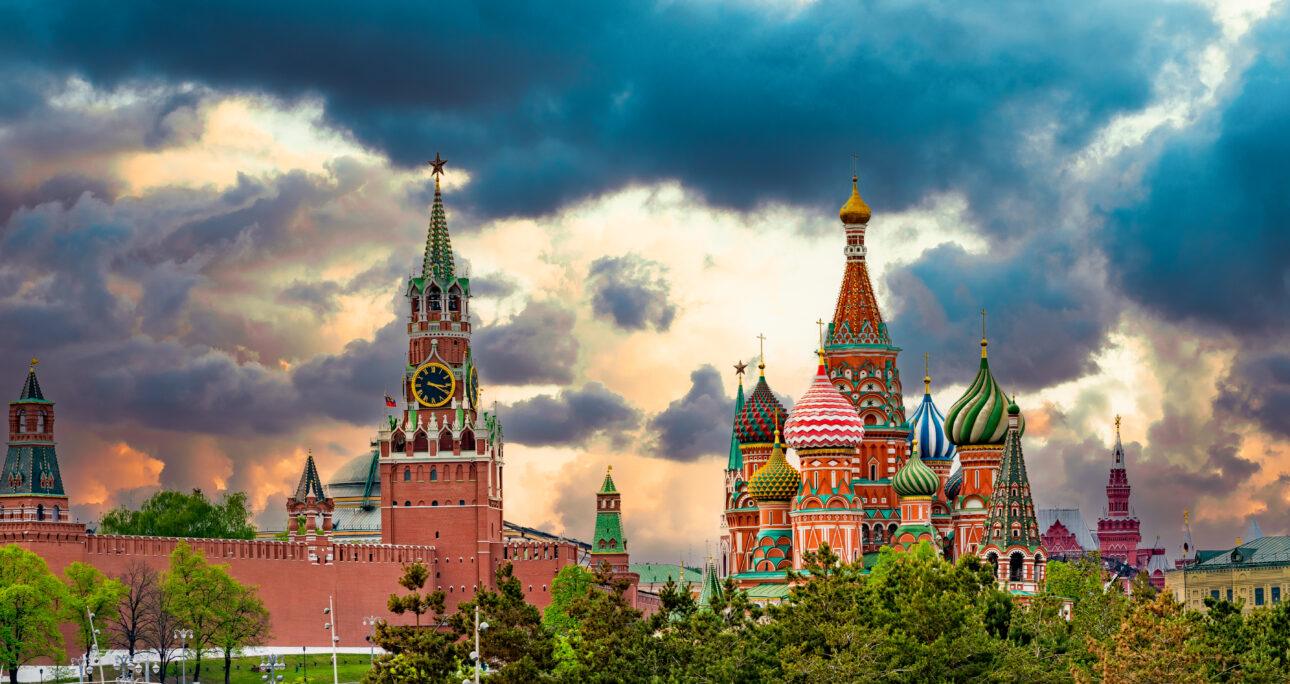
It was called ‘Mother Russia!’ A vast land that spanned eleven time zones. It was the land of Ivan the Terrible and Catherine the Great; the music of Rimsky-Korsakov, Borodin, and Tchaikovsky; the writings of Tolstoy and Dostoevsky; the gracefulness of Nureyev and Baryshnikov at the Bolshoi. Historically it was a land of serfs, hard, uneducated, people who served the land and the church, their only amusement, the pillaging of a nearby shtetl by Cossacks.
And, as Europe licked its wounds from the First World War, the wealth of the Romanovs and the poverty of the people exploded into revolution led by a zealot, Nicoli Lenin. A follower of Karl Marx, he worked to unite his country into an imagined Communist utopia where all production was controlled by the state, its bounty shared by all the people. The Soviet Union was born. Long live Marxism!
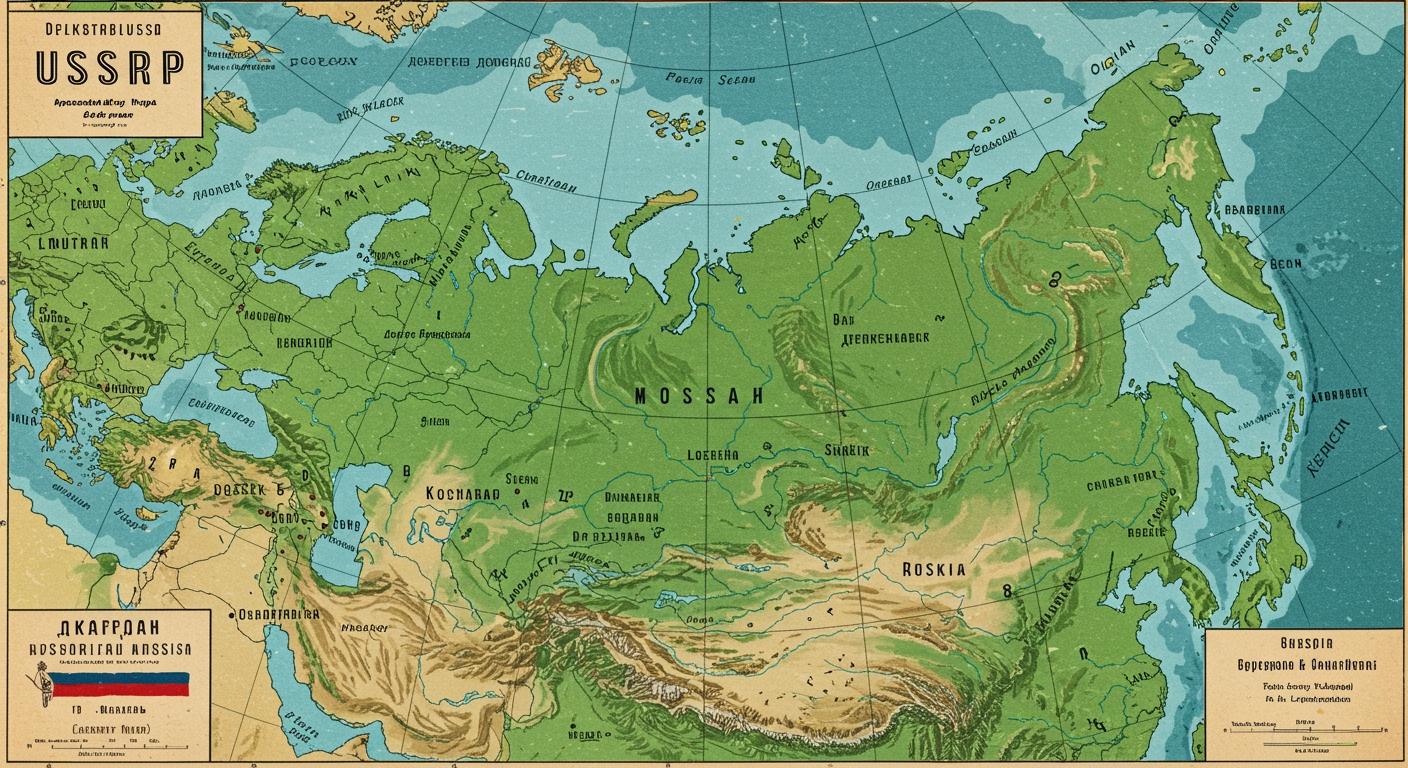
But the dream vanished before it began. In 1924 Lenin died and Josef Stalin became Premier. There would be no sharing. The Soviet Union was now an autocracy…a dictatorship. On through the global depression Stalin tightened his grip, determined to industrialize his backward nation. An estimated 20 million Russians died from his efforts, killed in gulags and assassinations. You disagree with the Comintern? Off you go to Siberia.
In June 1941 Germany invaded the Soviet Union with four million troops and 4,000 tanks. On the same week in 1812 near the same location, Napoleon had begun his invasion. As with Napoleon, Hitler’s invasion would fail due to stiff Russian resistance and a fierce Russian winter. More German divisions, more deaths. By Christmas the enemy’s advance was stopped, just twenty miles from Moscow as well as the outskirts of Leningrad and other cities along the front. Nearly three million German troops died in what Hitler had called Operation Barbarossa. As many as 20 million Russians perished in the war, many from starvation.
After the war a more determined Stalin led an exhausted and depleted Soviet Union to rise like the Phenix to become a world power that would challenge the United States. They developed nuclear weapons and travelled to outer space. National pride sought global respect, and despite an abortive incursion into Afghanistan and a missile foray into Cuba, their military and industrial prowess grew.
But, as they struggled to keep pace with the United States militarily, their internal market system crumbled. By 1990 it was unsustainable. A series of leaders had followed after Stalin’s death and now a new Premier, Mikhail Gorbachev, took over.
Understanding his country’s economic chaos, he launched ‘perestroika,’ a restructuring of the Soviet economy. He disbanded the Confederation of the fifteen Republics that comprised the Soviet Union. Each Republic would have to fend for itself. Enter Ukraine, Uzbekistan, Belarus and the other, now independent, countries into the league of nations. Russia was, once again, its own country. To the world Gorbachev was a hero. The Soviet threat was now dissipated. To Russians, however, he was a traitor, forever disgraced.
Since 1999, Russia has been led by Vladimir Putin, former head of the KGB, the country’s security apparatus. He was a leader in Stalin’s mold, not content with a Russia that didn’t strike fear into its adversaries.
In 2014 he ordered the invasion of Crimea. In 2022, pushed by the increasing threat of NATO and the United States’ expansion and influence into Ukraine, he invaded, breaking international protocols. Whether he was protecting Soviet sovereignty or intent on resurrecting his country’s past glory makes little difference. The distinction is lost in dead Ukrainian bodies and broken cities.
Vladimir Putin has the power to try; he may not have the power to succeed. We must always remember:
“Power tends to corrupt, and absolute power corrupts absolutely.”