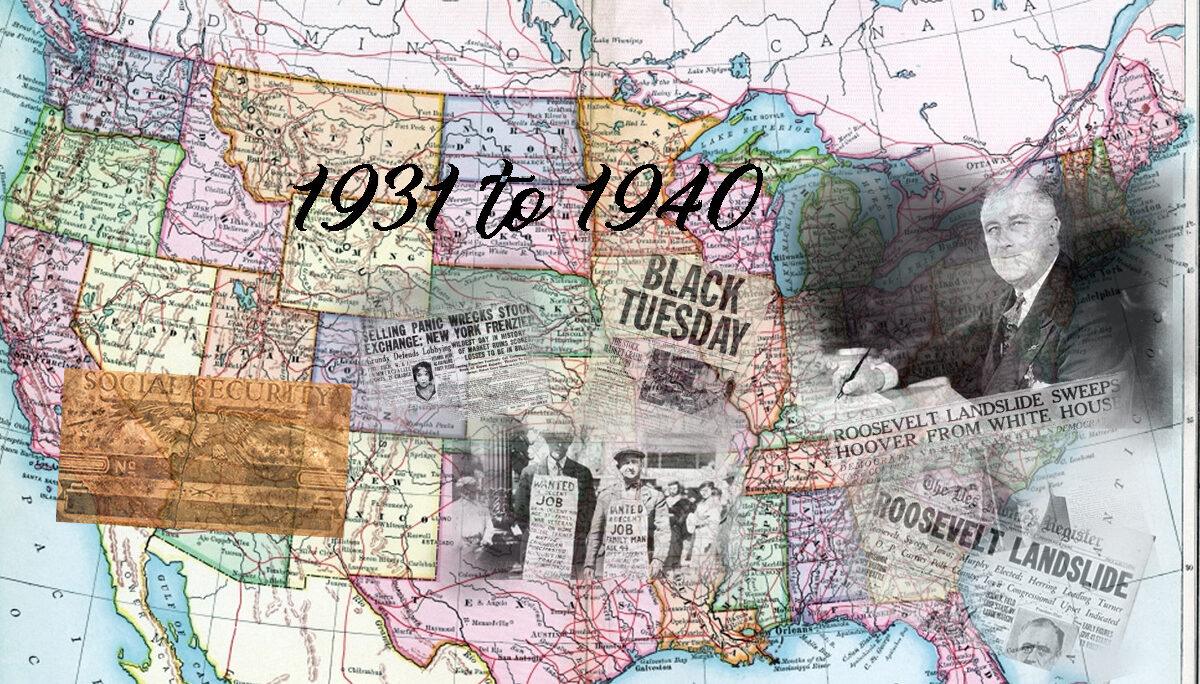
The Great Depression
In October 1929 the stock market crashed, and, as the decade crawled to a close, people continued to yearn for the freewheeling times they’d enjoyed for a decade, even as they sank further into the ooze and fears of the dark future.
Factories locked their gates, banks closed their doors, and panic ensued. Why? Why, suddenly did prosperity vanish? Jobs were gone! Savings were gone! Hope was gone! Across the country, and across the globe, commerce had thrived during ‘the Roaring ‘20’s,’ but suddenly there was no demand. People had the cars they needed, the homes they could afford…the iceboxes, the stoves, the clothes. Perpetual growth had been a fantasy. Nothing lasts forever!
In America, President Herbert Hoover and the Congress struggled to find answers. Solutions, even temporary remedies, eluded them. The depression deepened. In Germany, the fledgling Weimar republic struggled with hyperinflation and began to collapse. Someone had to be responsible. The embryonic Nazi party blamed the degenerates, the gypsies, and the bankers, many of them Jewish.
Then came the Presidential election of 1932 and the overwhelming victory of Franklin Delano Roosevelt. He bore the famous Roosevelt name, but not his uncle’s ideology. He was no patrician. The people and the country demanded action, and he responded.
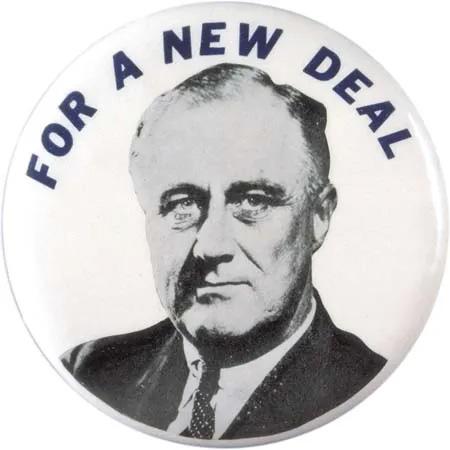
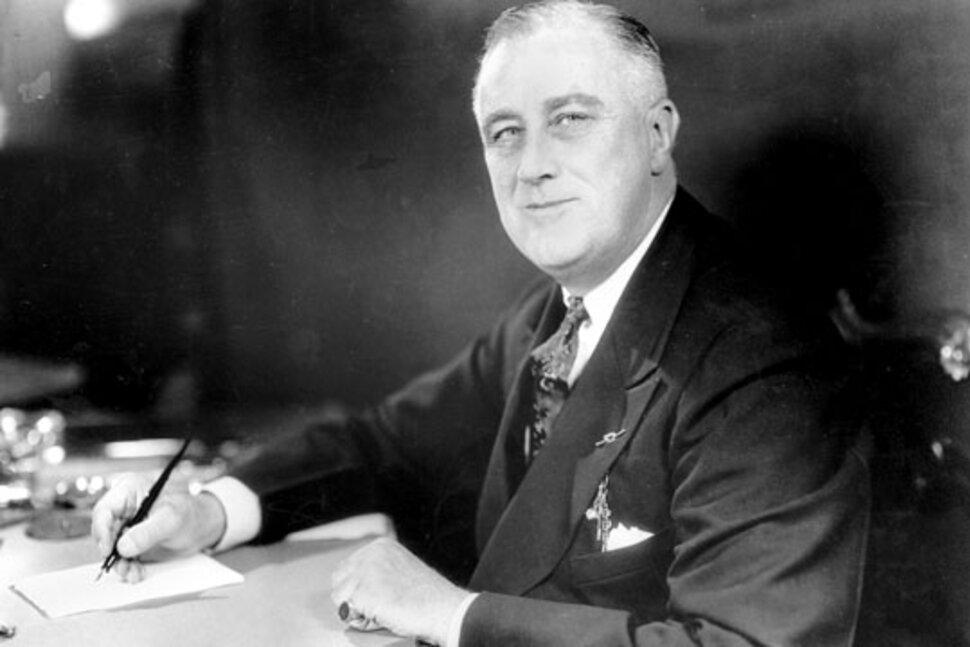
The New Deal was born, and with it came new laws and programs to help farmers and families. The National Recovery Administration, the NRA, established regulations in finance, communications, and labor. By 1935 a safety net for those who toiled was established…Social Security. Works programs gave jobs to many of the 13 million unemployed. The Civilian Conservation Corps and the Works Progress Administration provided a lifeline paycheck to millions. The Golden Gate and Bay Bridges were built. Schools, hospitals and roads were constructed across the country as FDR spoke to the American people in plain language through his frequent radio ‘fireside chats.’ His message was one of hope:
“We have nothing to fear but fear itself.”
Roosevelt was reelected by a landslide in 1936 as the world outside America floundered. In 1935 Benito Mussolini, the Italian dictator, invaded Ethiopia. In 1937 the Imperial Army of Japan invaded China and began ravishing that country. The Soviet Union, under Premier Josef Stalin, saw 10 million Russians die through neglect, starvation, and in Siberian gulags.
Meanwhile, in Germany, a new horror was evolving, the eradication of an entire race…an entire culture. Jews were being rounded up, their possessions forfeited, prisoners of the state pending execution. Germany was on the march. In 1938 they invaded Austria; in 1939 they invaded Poland. Great Britain and France responded by declaring war against Germany.
America remained isolationist, hoping to avoid entanglements, even as key Americans sided with Germany, including Henry Ford, Charles Lindbergh, and William Randolph Hearst. Their fear of Stalin’s Communism outweighed their fears of Hitler’s Fascism. Memories of World War I, the war to end all wars,’ were still too vivid. Meanwhile, America was slowly recovering from an entire decade of economic malaise.
The election of 1940 was just around the corner. George Washington had set the precedent. Presidents should not serve more than two terms. What would Roosevelt do with the world in turmoil, and so much more he hoped to accomplish, despite his debilitating condition caused by polio, infantile paralysis, which limited his mobility, but not his drive and convictions?