Before major league baseball moved 3,000 miles west in 1957, the sport was already popular across California with Triple-A league teams including the Hollywood Stars, the Los Angeles Angels, and the San Francisco Seals. We watched our local heroes, Gus Zenial, Frank Kelleher, Chuck Conners and others, struggle to get to the majors and we cheered them again when they returned. We sat in the sunbaked bleachers and ate ‘red hots.’ Vendors threw bags of peanuts with unswerving accuracy. Kids waited beyond the fences to catch an over-the-fence home run. It was an inexpensive, family-friendly, outing.
When Jackie Robinson broke the color barrier and took the field with the Brooklyn Dodgers, Branch Rickey and Walter O’Malley, the club’s owner, took a much-deserved victory lap and looked for his next world to conquer. Like Horace Greeley, he looked west, and saw a burgeoning population that had grown up with baseball. But it was expensive and time-consuming to fly to the west coast. He’d need to find another team to join him so visiting teams could play two opponents. He convinced the owner of the New York Giants, and in 1957 the league approved the move.
Los Angeles, 1957, dubbed ‘Seven suburbs in search of a city!’ Nearly 3 million people are busy building freeways and housing developments in suburbs north and south, avoiding smog and downtown decay.
City fathers and business moguls were eager to reinvent a city center and a major league baseball team could be the answer. The Dodgers could play at the Coliseum temporarily, but they would demand their own stadium. Angelenos were not going to pay for building a stadium as several midwestern cities had done.
A few years earlier, circa 1950, city fathers decided to use eminent domain to build a massive public housing project, Elysian Park Heights. Northwest of the 4-level interchange that connected the 101 and 110 freeways was an old, near-blighted section of the city. On its northern end lay a large area, multiple ravines, originally a stone quarry, of old homes, poor families, and migrants…the primarily Latino enclave, Chavez Ravine.
Funded in part by federal money, the project would include more than 1,000 units, two dozen 13-story buildings and 160 two-story townhouses, as well as several new schools and playgrounds. Residents resisted, typically offered far less than their homes were worth. Lawsuits delayed construction.
Norris Poulson, elected mayor of Los Angeles in 1953, opposed public housing. The city bought back the land at a reduced price from the Federal Housing Authority, with the agreement that it would be used for public purposes. By 1957, the area had become a ghost town. Only 20 families, holdouts who had fought the city’s offers to buy their land, were still living in Chavez Ravine.
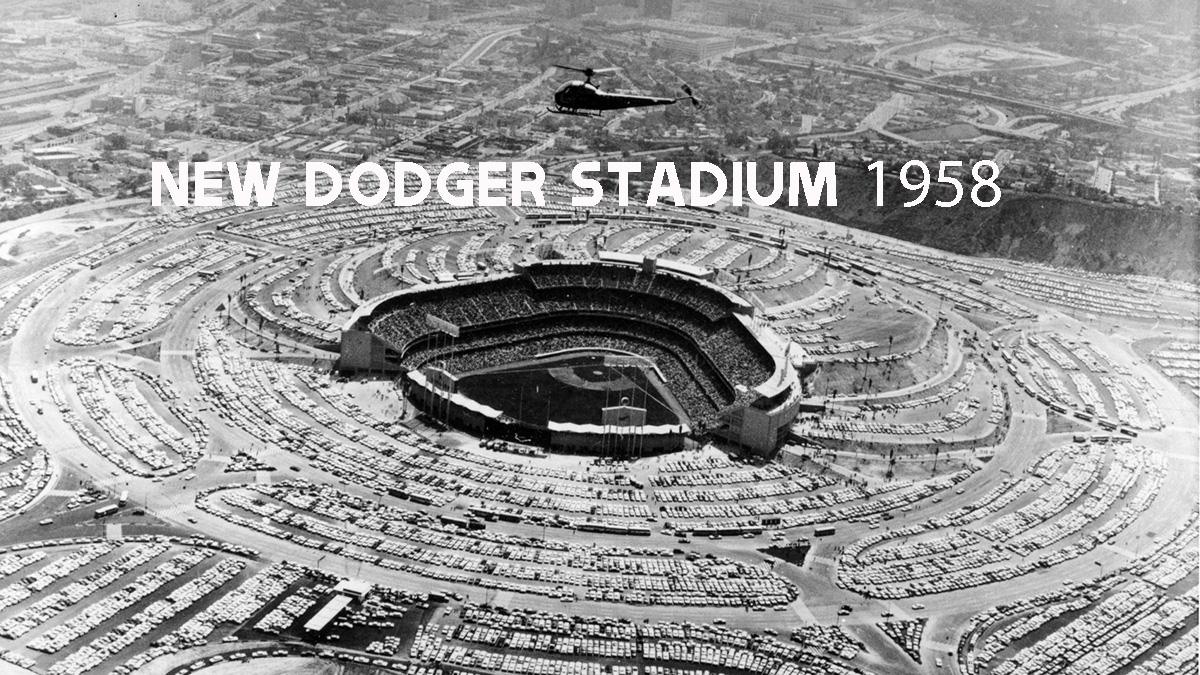
In June 1958, voters approved a referendum to sell Chavez Ravine to Walter O’Malley for construction of a new stadium. The stadium would ultimately cost $23 million, with a capacity of 56,000 and parking for 16,000 cars. 8 million cubic yards of dirt would be removed. O’Malley would pay $494K for the property in a complex arrangement that some believed cost Los Angeles taxpayers as much as $4 million.
There are those who remain bitter over the terrible treatment of the Chavez Ravine families. But it was a long time ago and, in the decades, since, memories of Sandy Koufax, Tommy Lasorda, Fernando Valenzuela and a hundred others helped weave Dodger Blue into the fabric of the city as a new season begins. Go Dodgers!