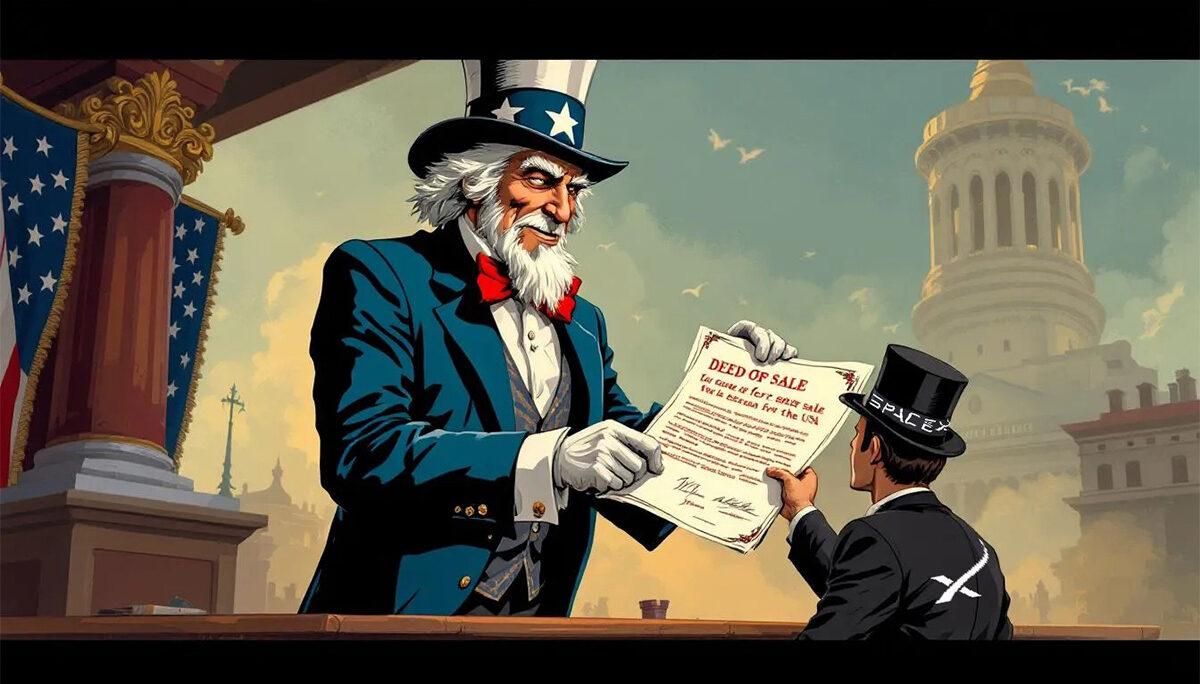
The wealthiest! The most despised! The most influential! The most innovative! Choose your superlative! Elon Musk may well be all of them.
Today, this technocrat sits at the right arm of, likely, the most powerful man in the world, wielding a machete at government bureaucracy wherever he imagines it.
A few decades ago, President Clinton made a similar attempt, directing his Vice-President, Al Gore, to find places where the Federal government could be downsized. The program was most notable for its failure. Lobbyists, Congressmen, and wealthy donors all cried ‘foul,’ NIMBY…not in my back yard. The government continued to grow, and the deficit continued to balloon.
The current approach is quite different. Massive reductions, early retirement and a ‘take no prisoners’ attitude. The protections generally provided by Unions and Civil Service regulations have been ignored. 30,000 people accepted early retirement, and the termination train continues to steamroll forward.
The problem isn’t that this is all good or all bad. We are in uncharted territory. We all agreed the government was bloated and needed downsizing. Deficits just couldn’t be sustained. Yet, we are equally distraught at what it might mean. We can laugh at the Gulf of America. We can be culturally upset with the upheaval at the Kennedy Center but 2,000 people discharged from USAid…is that good or bad?
There is precedent. In the late 19th Century, Cornelius Vanderbilt, a railroad tycoon, fired all his employees every two years believing they had succumbed to complacency. A few decades ago, companies acknowledged The Peter Principle …employees in an organization rise to their level of incompetence and must be periodically purged.
Elon Musk grew up in Praetoria, South Africa, with money and privilege, in a completely segregated society, during the last decade of apartheid where ‘whites-only’ dominated all personal and commercial life. He left the country for Canada less than one year before Nelson Mandela was released after 27 years of imprisonment.
Resettled, he enrolled in college and earned degrees in Physics and Economics, eventually arriving in Silicon Valley at a most propitious time. Opportunities were strewn across the landscape. In 1995 he and his brother created Zip2, an internet city guide for newspapers, with maps, directions, and yellow pages. It was sold four years later to Compaq and Musk became a millionaire.
This was followed by his co-founding of X.com, an online financial services and e-mail payment company. In the following few years he would be fired and rehired as CEO. That company ultimately became PayPal and Musk’s payout was nearly $200 million. He was on his way!
Enter a new century! Musk invested $100 million of his own money to launch Space X, a designer and builder of reuseable rockets. In 2006 the company failed its 1st launch attempt but was subsequently awarded nearly $2 billion in NASA contracts. It would be 2016 before SpaceX succeeded in returning a rocket to its launching platform. In 2020, it launched its first crewed flight, becoming the first private company to place astronauts into orbit and dock with the ISS. The company then developed Starlink, clustered low-orbit communication satellites. Musk made them available to Ukraine as no cost.
Finally, we come to Tesla. He didn’t create it but early on became its majority shareholder and driving force. In 2008, the company began delivering the Roadster, an electric sports car. With sales of 2,500 vehicles that year, it was the first mass-produced all-electric car to use lithium-ion battery cells. There are now 7 million Tesla’s on our highways. (Reluctantly, I’ll refrain from commenting on the erratic quality of its drivers)
In 2016, Musk co-founded Neuralink, a neurotechnology startup, with the goal of integrating the human brain with artificial intelligence by creating embeddable devices.
Elon Musk will continue to innovate and aggravate. He is a presence in today’s life, a conundrum that only tomorrow’s historians will evaluate.