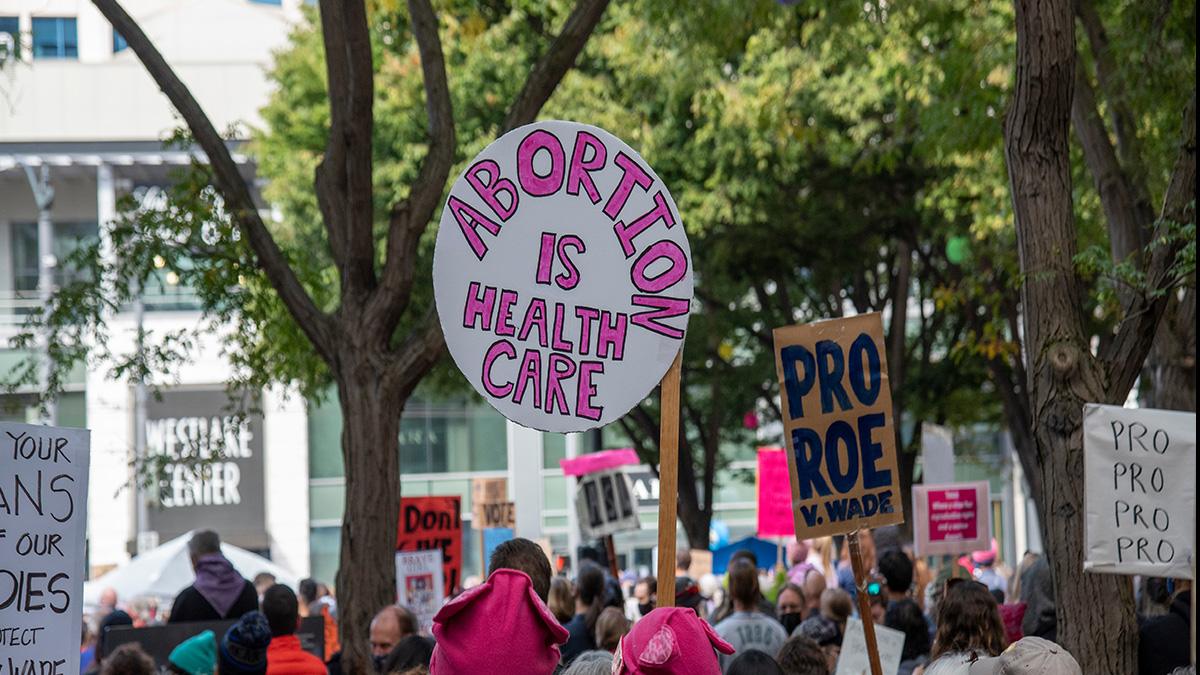
There may be no more contentious issue in our country today than abortion, a subject that gets to the very essence of life and procreation. Half a millennium ago, pregnancies and births were occasions of joy. Life was precious and large families were an asset to those who lived off the land. And well into the19th century, abortion was not an issue. Most people held to the Christian belief that personhood began at ‘quickening,’ a now obsolete word for viability, between 18 and 21 weeks.
Since the Industrial Revolution, however, all pregnancies weren’t met with the same euphoria. Sometimes unwanted, or unplanned, they might arise from poverty, illicit liaisons, rapes, or raging hormones. However they occurred, bringing them to term could cause turmoil, even death. Many women opted instead to resolve their situations in dangerous back-alley operations.
Abortion rights were often inseparable from a recognition of women’s rights. It wasn’t until the end of the 19th century that most states even allowed women to own property in their own name, and the Constitutional Amendment allowing women to vote wasn’t enacted until 1922. Title IX, passed in 1972, provided women some degree of equality in sports and education, and two years later a new law allowed women to possess a credit card in their own name. Each step toward gender equality grudgingly won paved the way for further freedoms.
A half-century ago, 1973, the Supreme Court decided Roe v. Wade, establishing a framework for legal abortions. Until then, abortion had been a criminal offense in most states—as late as 1950 in California. But in the wake of the decision, new laws began abolishing Criminal sanctions, allowing abortions prior to the viability of the fetus. Finally, in 2022, Proposition 1 enshrined the availability of abortion into law. California voters passed it with an astounding 35% margin.
As the pro-choice voices grew louder, so did the backlash. To many Americans, the fetus—any fetus, no matter how young—is a human being, with a soul, and deserving of protection. And who among us can say for certain when a fertilized egg inherits a soul and a consciousness? Is it at conception, when it becomes viable, or not until birth? Advances in modern medicine have only made the question thornier, as viability became possible ever earlier. Activists began to personalize the fetus, showing pictures of aborted fetuses…a life lost, or those in utero who might live to become Nobel Prize winners. The argument heated up as clinics and doctors providing abortions were harassed and killed in defense of the unborn.
And yet who bears the responsibility to give that newborn the twenty years of love, sustenance, and education required to bring that fetus through infancy into a moral, functioning adult when the pregnancy hadn’t come from love and choice.
That brings us to today. Society now accepts an increasing array of relationships. We have medical aids that can both inhibit or encourage contraception. We have medical procedures to overcome infertility. We have fetuses surviving at 21 weeks. We have nations that encourage births to offset aging populations and others that encourage women to delay having families in order to raise standards of living. Meanwhile governments and religious leaders around the world continue to believe they are invested in family planning.
But as much of the Western World turns away from doctrinaire religious beliefs and medical science offers a plethora of options, one has to wonder where personal freedom ends and government interference begins. There is an incongruity when a country vigorously champions freedom of speech and freedom of religion yet argues to limit other personal freedoms.