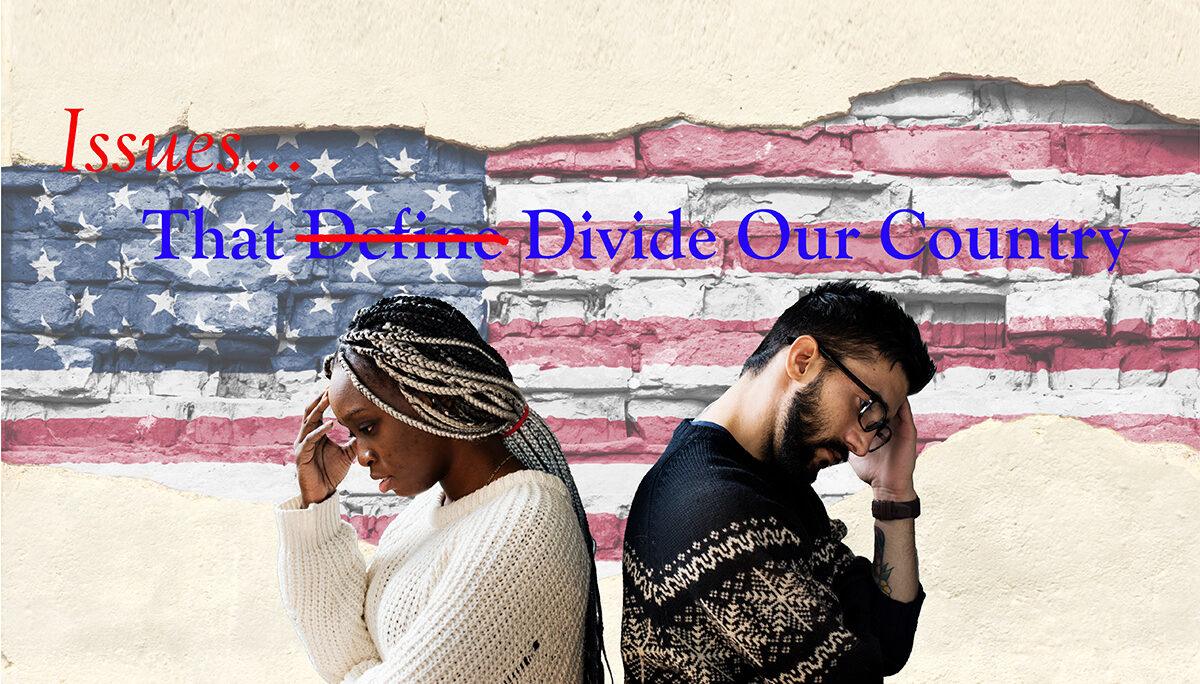
Issues…
That Define Divide Our Country
- Anti Lynching law – In 1835 a black man was accused of killing a deputy. Without a trial, he was hanged from a tree and his body burned. Finally, one hundred years later two Senators proposed a national law to outlaw lynching. Its passage was blocked by Southern Senators. In 2022 the Emmitt Till Anti-Lynching bill, classifying lynching as a Hate Crime, was enacted into law. In the century that had passed 7,000 people were lynched, predominantly Negro men. Although this does not technically fit the category, I’ve included it because of the tragic delay it took for its passage.
- Equal Rights Amendment – In 1920 the passage of the 19th Amendment finally guaranteed women the right to vote. Three years later the Equal Rights Amendment was proposed to secure full equality for women and end the legal distinction between the sexes in terms of divorce, property ownership, and employment. In 1943 its language was clarified: Equality of rights under the law shall not be denied or abridged by the United States or by any state on account of sex. In 1972 the ERA Amendment was passed by both Houses of Congress and sent to the states. It lapsed in 1982, still 3 states short of ratification.
- Assault weapon ban – The 2nd Amendment guaranteed citizens the ‘right to bear arms.’ In colonial times that meant muskets, but courts have repeatedly concluded that this right is unlimited even as the ownership of military weapons by individuals became more widespread.
- In Stockton, California, in 1989, a teacher and 34 children were shot, five of whom died, killed with a semi-automatic Kalashnikov rifle. In October 1991, another 23 people were dead and 27 wounded. In 1993 a shooter killed eight people and wounded six. Two of the three firearms he used were TEC-9 semi-automatic handguns with Hell-Fire triggers.
- Finally, in 1994, the Violent Crimes Act was passed, including a ban restricting firearms defined as “semiautomatic assault weapons,” as well as “large capacity ammunition feeding device. The ban, however, included a ‘Sunset’ clause. It would lapse in ten years unless Congress chose to extend it. And although mass shootings dropped 37% during the ban, it wasn’t extended. Since its expiration more than 1,200 people have been killed and this year, we have experienced more than one mass event each day as Columbine, Sandy Hook, Parkland, Las Vegas, and a myriad of other deadly sprees are seared into our national consciousness.
- Abortion rights – From dark alleys, clothes hangers, and unsanitary conditions the right of a woman to control her own body has always been a contentious issue. Is a fetus a living being? When does life begin? The pendulum swung one way, then another. Liberal states have supported a woman’s right to make her own decision consistent with her religion and morals. Conservative states have relied on the Bible and its belief in the ‘sanctity’ of life. The overturning of Roe v. Wade and recent rulings have energized both sides in a way which continued to divide us.
- Balanced budget Amendment – Exorbitant federal government debt is a 20th century phenomenon. It didn’t exist for the 1st 120 years of our existence. It began with funding our entry into World War I and despite the prosperity of the Roaring Twenties, it remained. Then came the Great Depression and social programs to restart the economy and put people back to work. Suddenly we were faced with World War II and, once again, we chose victory over fiscal prudence. Our focus on fiscal responsibility waned. Undeclared wars in Korea and Vietnam. Domestic programs, such as the Interstate Highway system and space program coincided with lowered tax rates. Then came Desert Storm, expensive weapon systems and more tax cuts! Each administration, Republican and Democratic, was unwilling to make the difficult decisions. In multiple Congresses Balance Budget Constitutional Amendments have been proposed…all have failed.
Share the Post: