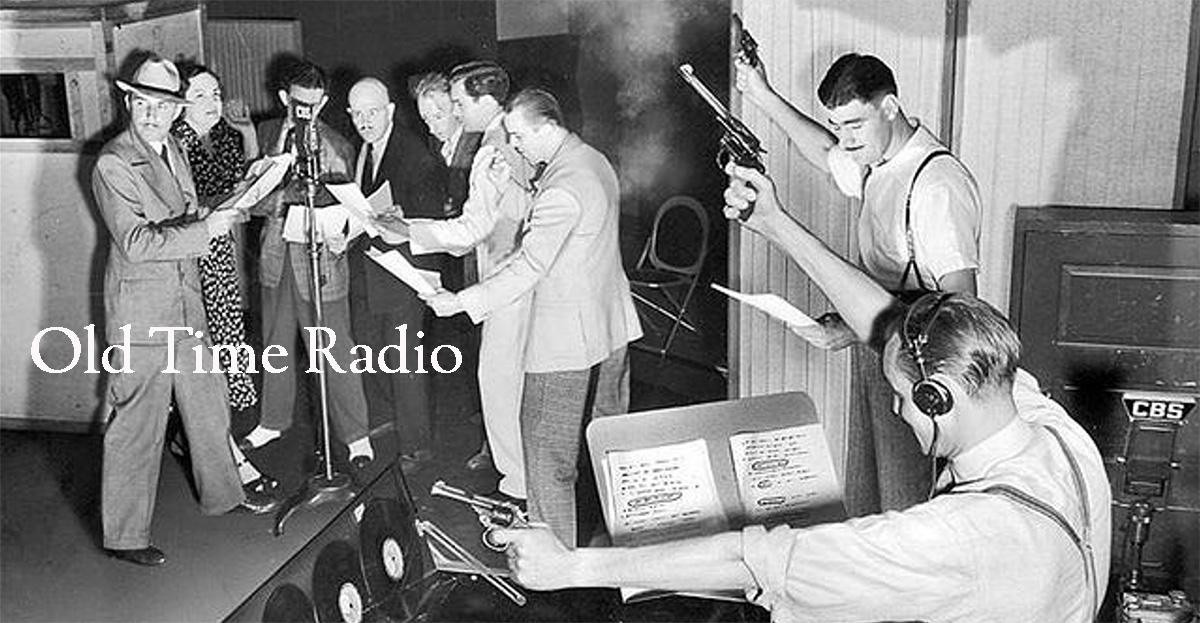
“We have nothing to fear but fear itself!”
It was early 1933. Unemployment had soared. Men, once wealthy, now penniless, jumped from buildings. Banks shut their doors and the optimism that had illuminated the country five years earlier was gone. But now the country had a new President, Franklin Roosevelt, and his soothing words echoed across radios from Maine to California into small towns everywhere. We’ll survive. Things may be difficult for a while as we sort things out, but don’t be afraid. People listened and breathed a little easier.
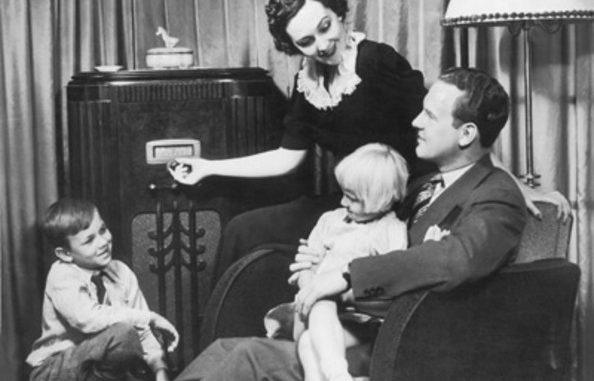
The radio! Our lifeline…free, and our connection to the world. We knew that Maxwell House Coffee was good to the last drop; that people would walk a mile for a Camel (cigarette), and Duz got laundry clean. The Hit Parade introduced us to the popular music of the day while The Lux Radio Theatre, Inner Sanctum, and The Whistler entertained us in the evenings. We suffered with the Brits as Edward R. Murrow broadcast from a London hotel room, describing the German bombers overhead dropping their death from the sky. Walter Winchell and the click, click, click of his teletype kept us informed while Louella Parsons shared the latest gossip from Hollywood. We listened as Joe Louis barely defeated Billie Conn, and the Yankees took another pennant.
Growing older sharpens memories of things we liked and disliked when we were children. But one thing my generation remembers with universally warm feelings is listening to the radio, not while we walked, not wearing headsets, but in the living room with our family or getting ready for bed. We even listened in our Ford jalopies, if we were prosperous enough to own one.
Radio has its roots in ‘wireless telegraphy.’ Throughout the late 19th century experiments proved its possibilities. Marconi is credited with the first successful radio transmissions, but they were signals, not voices. Voices were first transmitted in 1906. It would be another 14 years for the first radio programs to appear after considerable investment and technology, such as the invention of the vacuum tube.
The first news was aired in 1920 from a Detroit station; entertainment followed two years later and soon the airwaves gave us sports, weather, comedy, drama, and, of course, commercials to pay for it all.
By the 1930’s the industry had attained a structure. There were those companies who built radios, Zenith, Emerson, and RCA. And there were those who aired the magic. CBS was formed in 1927 as the United Independent Broadcasters. Because of patent conflicts, RCA was jointly owned by GE, AT&T, United Fruit, and Westinghouse. It formed NBC in 1926. RCA wouldn’t become an independent entity until 1932.
And, during the depression of the 30’s and the war’s ‘40’s these two networks controlled the national airways, selling their programs to affiliate stations in every city in the country. These affiliates developed their own personalities and programming, focusing on weather, local news, and sports.
During the war Tokyo Rose broadcast American music to our soldiers stationed in the Pacific, thousands of miles from home, hoping to damage morale. Instead, it more often linked memories of loved ones. Jack Benny’s violin and Fibber McGee’s closet made us laugh during the dark days of the war and helped us celebrate the peace that followed.
We turned to television in the ‘50’s and now to streaming and social media. It’s all very exciting but nostalgia for old time radio still brings a smile to my face. It was a time when there were fewer wrinkles in society (and on my body!).