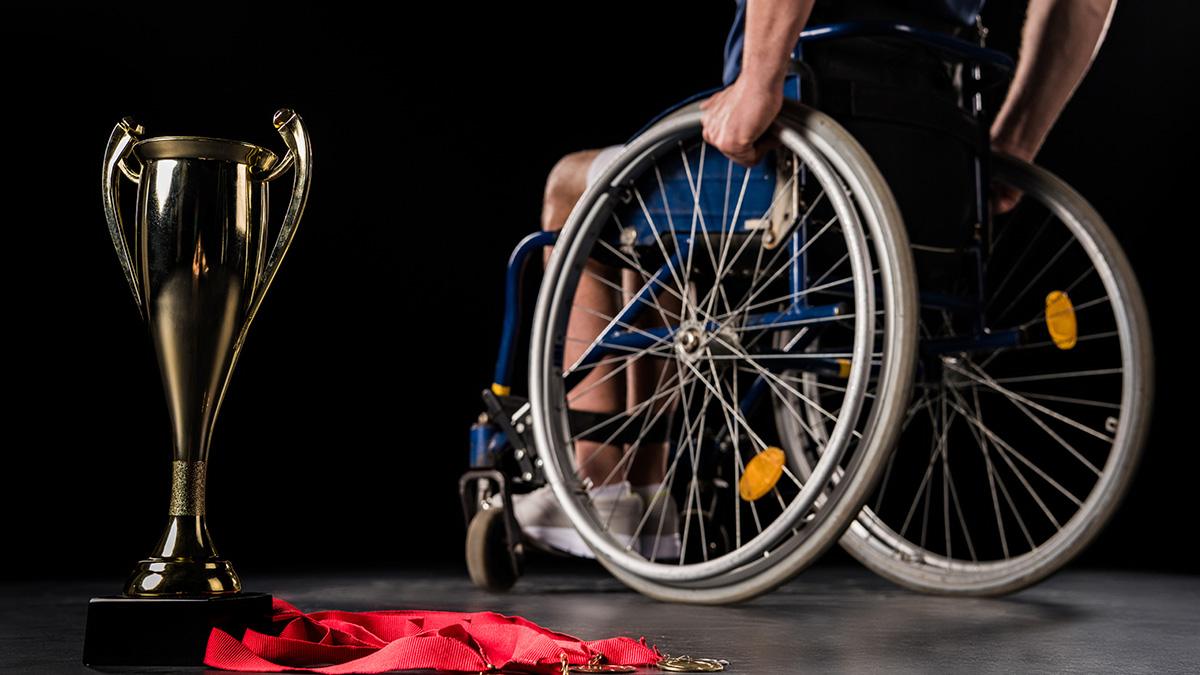
While the Olympic torch has been extinguished, the Olympic spirit remains. In less than two weeks Paris will host the Paralympic Summer Games where nearly 5,000 disabled men and women from 150 countries will vie for medals in 24 different sports.
Not too many generations gone by these people would have shunned…the detritus of society. Today we are in awe at their abilities…blind or one legged skiers at the Winter Games or skirting swiftly across basketball and tennis courts in wheelchairs, running and swimming in the Summer Games, each athlete oblivious to what we consider handicaps.
It all began at a hospital just outside of London in 1948 when 44 wounded British soldiers with spinal cord injuries and confined to wheelchairs, decided their lives weren’t over and competed against one another. In 1952 the competition was held again, this time joined by Dutch and Israeli athletes.
By 1960 the Rome Olympics hosted the first official International Paralympics with more than 400 wheelchair athletes from 23 countries participating, but it would be another 16 years…1976, before all handicapped athletes, not just those in wheelchairs, would vie in an increasing array of sports.
Various physically disadvantaged individuals had competed in the regular Olympic games since they’d begun in 1906…a gymnast with an artificial leg, a water polo player with one leg, even a man who’s right arm had been amputated competed in shooting events. Now, finally, other talented athletes could compete on a more level playing field.
Today there are 10 specific categories of impairment required to qualify ranging from missing limbs to muscle impairment, vision, and, more recently, intellectual impairment. Athletes who are deaf had already established the Deaflympics as a separate competition.
The Special Olympics were established in 1962 by Eunice Kennedy Shriver, sister of President John F. Kennedy, to offer hope to those with problems ignored at that time by the I.O.C.’s Paralympic Games…mental retardation. What had begun as a Summer Day Camp experiment, evolved by 1968 into the first Special Olympic competition. It was held at Chicago’s Soldier’s Field and hosted more than 400 athletes as young as age 8 from the United States and Canada.
Today it is the world’s largest sports organization providing support to more than five million children and adults in 172 countries having intellectual disabilities. At the local, national, and international level they conduct more than 100,000 events each year. The games are held with a single purpose: “Ending the cycle of poverty and exclusion for people with intellectual disabilities.”
The Special Olympics and Paralympics coexist. Both are recognized by the I.O.C., the International Olympic Committee.

The Paralympic flag is in the shape of an Agito, Latin for ‘I move! I shake! I stir!
…and, indeed, the athletes about to compete in Paris will astound you and fill your soul with amazement.