
As man has evolved through the millennium, he has searched for ways to live in diverse communities with tolerance and equanimity. We continue to struggle with our differences in sex, race, language, economics, and education. Through the centuries various efforts have been made to record those rights and relationships. It has been slow and uneven!
The Ten Commandments

In the Old Testament’s book of Exodus, Moses, leading the Hebrews out of bondage, is given two stone tablets by God. Inscribed on them are the Lord’s commandments… ten principles on how people should live lives of morality and fealty: ‘Thou Shalt Not Kill!’ ‘Thou shalt honor thy mother and thy father,’ ‘Thou shalt not Steal’…’Covet they neighbor’s wife’…’Pray to other Gods.’ Rules for living together in harmony.
The Code of Hammurabi
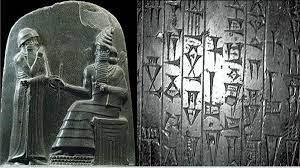
Nearly 4,000 years ago in ancient Babylonia, 272 ‘laws’ were carved onto a basalt stele and stationed in the central square where all could see. The King, Hammurabi, had compiled, in a broad moral swath, rules of law and conduct that were to guide his subjects and set forth the punishment for violating them. Their stated goal was to prevent the strong from oppressing the weak. Violations were punishable by the principle of ‘an eye for an eye.’ Similar doctrines guided future societies in the centuries that followed.
The Talmud
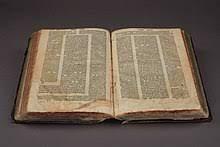
Until the Romans destroyed the Second Temple in 70 BC, Jewish teachings of ethics and religion were oral, passed on by Rabbis from one generation to another. This early Jewish diaspora created a need to formalize these teachings. Assembled through the centuries, these beliefs, more than two thousand tracts, became the Talmud. Each tract conveyed a belief, a direction for a moral life...’the eye and the heart are two abettors to the crime…’ ‘Just as wisdom has made a crown for one’s head, so, too, humility has made a sole for one’s foot.’ Massaged through the centuries, the Talmud remains the lynchpin to Jewish teaching.
The Magna Carta

Medieval England, 1215, a country ruled by King John with the conviction that Monarchs were above the law. On an open field near Windsor Castle, rebellious Barons forced the King to sign an agreement that prohibited unlawful imprisonment, provided for prompt and open justice, and the protection of religious rights. It was annulled and reaffirmed over the next centuries, but the Magna Carta remains man’s earliest document intended to provide individuals protection from an overreaching government.
The Declaration of Independence
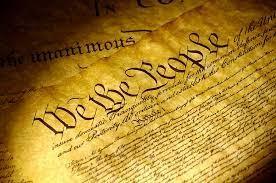
In the late 18th century American colonists outlined their grievances in a letter to their sovereign, King George III of England. Their cumulative complaint was simple…they had the right to determine their future and were not beholden to a distant authority. Influenced by the great writers of the Age of Enlightenment, thinkers such as Bacon, Locke, and Rousseau, Thomas Jefferson crafted a document that stirred hearts across the colonies…’we hold these truths to be self-evident, that all men are created equal, that they are endowed by their creator with certain unalienable rights. Among these rights are the life, liberty, and the pursuit of happiness.’ It became the framework for the American experiment. The strength of the Declaration is diluted today by the reality that it was primarily defending the rights of white males.
The Emancipation Proclamation
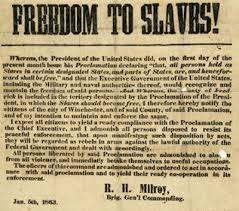
The Civil War was entering its third year, its outcome uncertain. President Lincoln issued an Executive Order freeing the 3 ½ million slaves in the Confederacy, hoping that they would take up arms against their masters. Slaves in Maryland, Kentucky, Delaware, and Missouri…border states, were excluded, fearful it would drive them into the arms of the south. The Proclamation would be followed the war by the passage of the 13th Amendment, permanently prohibiting slavery. Racism, however, would continue to the present.
The Universal Declaration of Human Rights

A landmark document, adopted by the United Nations General Assembly in 1948 established global principles. All human beings are born free and equal in dignity and rights. They are endowed with reason and conscience and should act towards one another in a spirit of brotherhood. Everyone is entitled to all the rights and freedoms set forth in this Declaration, without distinction of any kind, such as race, color, sex, language, religion, political or other opinion, national or social origin, property, birth, or other status. It was a major step forward in human consciousness, an objective we continue to strive to achieve.
Great works, such as the Quran, the teachings of Jesus, and the writings of Buddha stirred humans in other parts of the world. Others, wiser than I, are better skilled to speak to their influence.