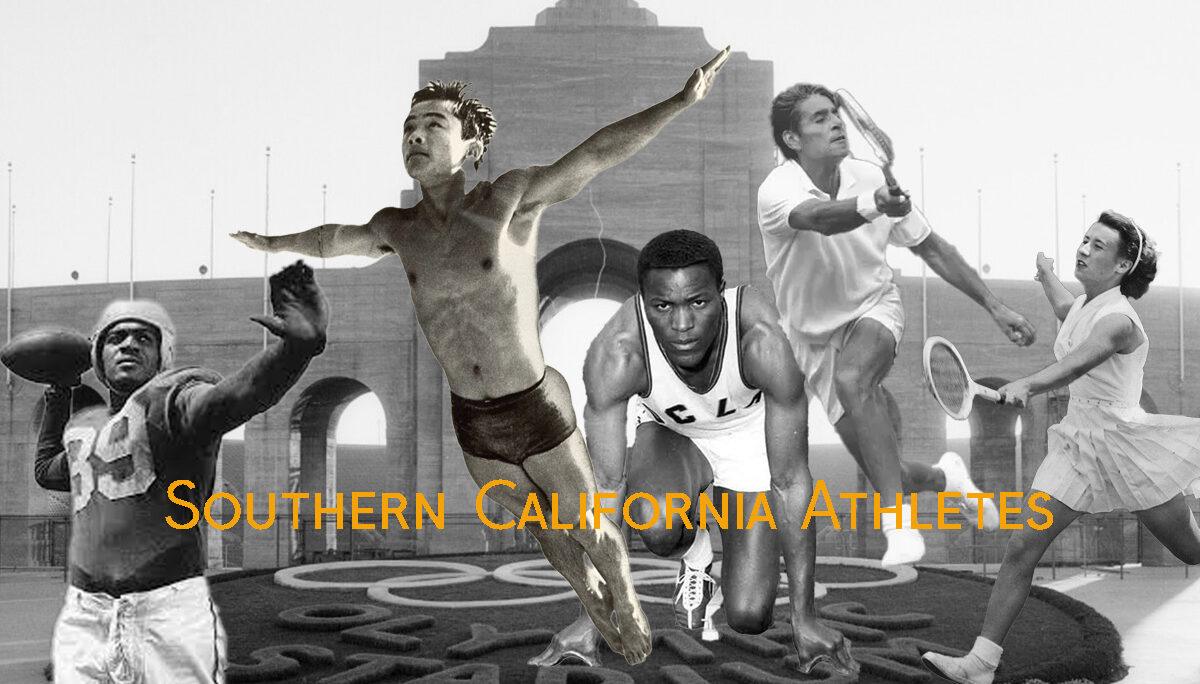
Southern California has always been a breeding ground for top athletes, think Serena, Kobe, Kareem, Troy…even OJ. Generations earlier, however, there were others whose size, race, and sex defied convention, and made them true sports icons.
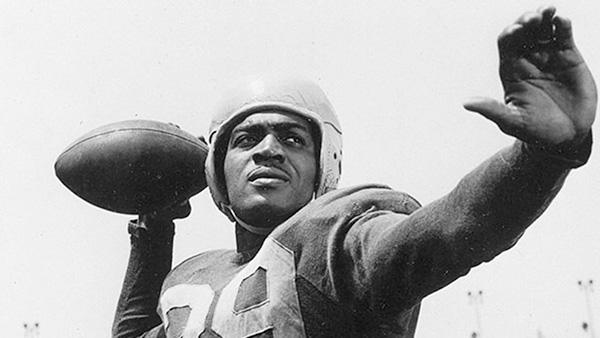
Raised in Lincoln Heights, he led his high school to a city football championship before enrolling at UCLA. He was a star in both football and baseball. In 1939 he was named All-American as he led the nation in scoring. Some scouts thought him better than his baseball teammate, Jackie Robinson. Meanwhile the NFL had continued its decade long ban against racial integration. Frustrated by football’s white-only policy, in 1946 the Los Angeles Coliseum Commission refused to renew its contract with the L.A. Rams unless the ban was overturned. It was and the Rams immediately signed Washington. He played two seasons as a star running back, including a 92-yard touchdown run against the Chicago Bears. His #13 jersey was retired by UCLA in 1956.
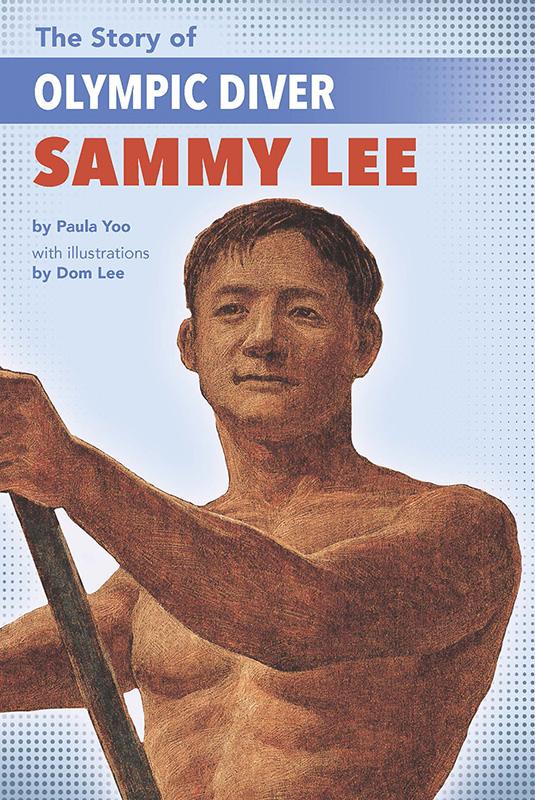
Born in the 1920’s when few Koreans lived in Southern California. Sammy was intrigued by all the medals and flags of the 1932 Olympics that adorned the nearby Coliseum, especially those of diving. He was only permitted to use the local pool one day a week with other non-Caucasians. He received his medical degree in 1947 and won Olympic medals for diving in both 1948 and 1952, only the 2nd Asian American to win a medal. He served as a Major in the U.S. Army Medical Corp during the Korean war but, afterward was ‘strongly’ discouraged from buying a home in the white enclave of Gardena, including bomb threats. In 2010 the corner of Olympic and Normandie, now the center of the city’s Koreatown, was renamed the Dr. Sammy Lee Corner in his honor.
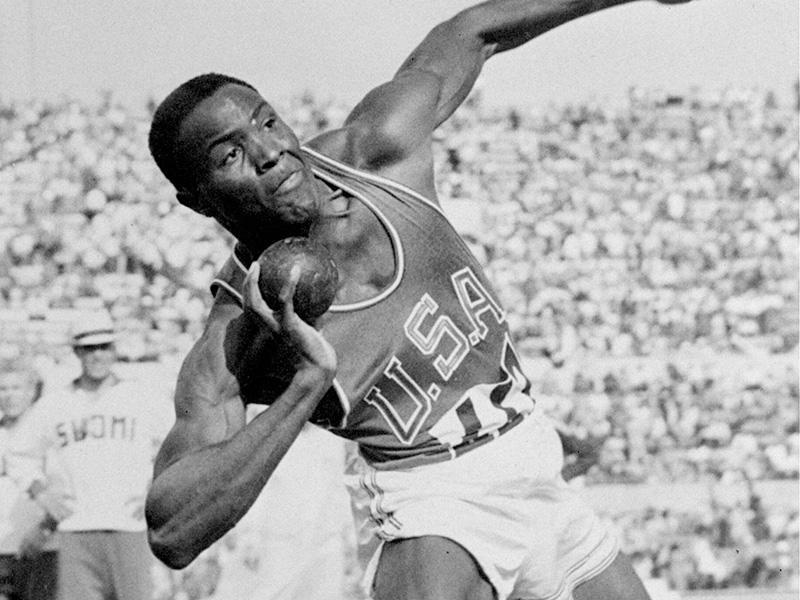
Grew up in Central California. In 1952 a young Rafer watched as Bob Mathias set records in the decathlon…a grueling 10 event of track and field excellence. In 1955, now a UCLA freshman, he broke Bob’s record. Between 1955-1960 we won medals at both the Pan-American and Olympic games, repeatedly setting new records. In 1960 the A.P. voted him Athlete of the Year. In later life he was a goodwill ambassador traveling around the world.
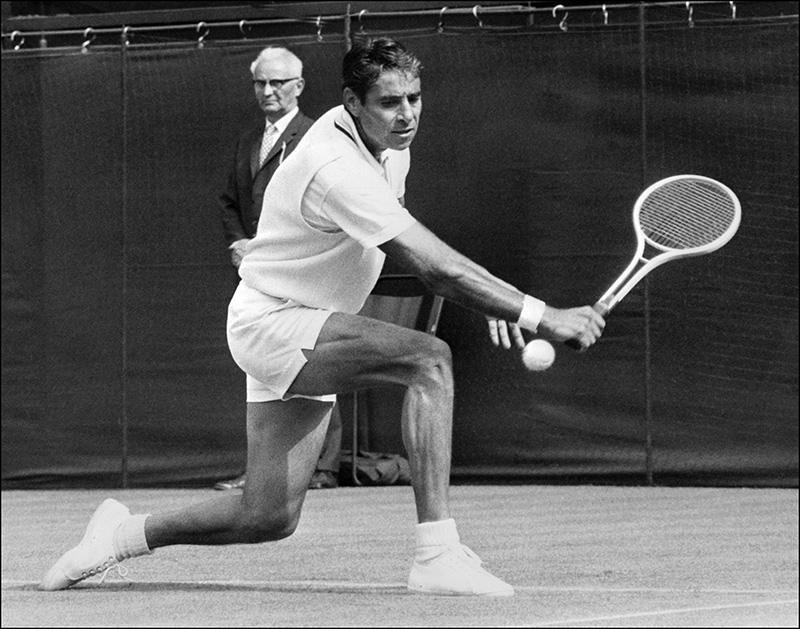
Born in East L.A., his mother used her hard-earned pennies and paid $.51 for a used tennis racquet for her son’s 12th birthday, even though there were no courts available to Latino youths. Pancho taught himself watching whites play at Exposition Park. Still a teen, he began winning tournaments but at 15 he was arrested for burglary. When the war came, he enlisted in the Navy, eventually ousted with a bad conduct discharge. He picked up his racket and never looked back. As 1949 turned into 1950, amateur tennis became professional and Pancho played with mixed success, often losing to Jack Kramer, despite Pancho’s aggressive serve-and-volley style. Still his good looks made him a crowd favorite. By the mid-1950’s he was ranked #1 and won 13 Grand Slam Singles Championships. He stands tall in the history of tennis icons.
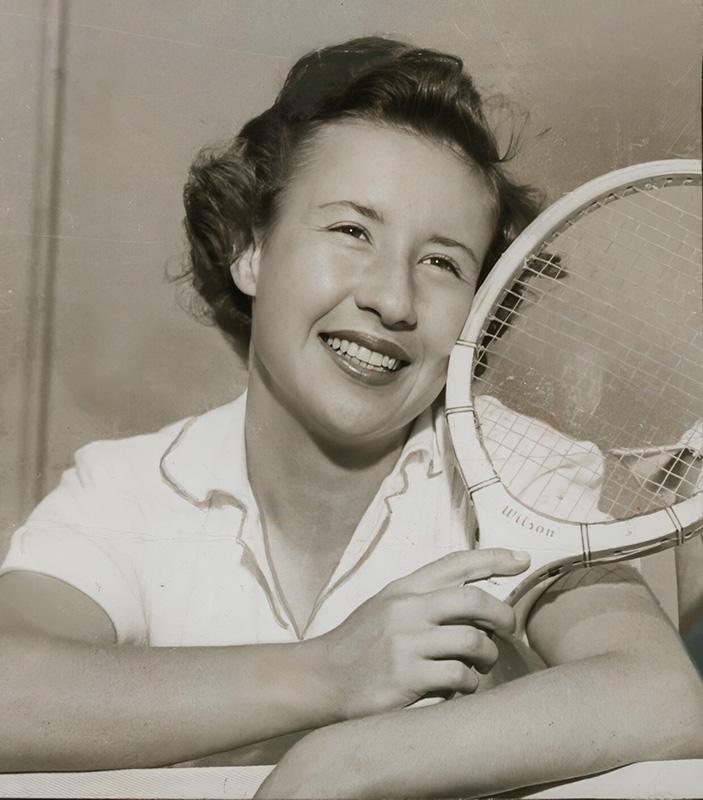
Affectionately called ‘Little Mo,’ this precocious 5’6” teenager grew up on the tennis courts of San Diego’s Balboa Park. Tennis was still an amateur sport in 1953 when, at only 18, she became the first woman to win tennis’ Grand Slam (Australia, French, Wimbledon, and US Open) losing only a single set on her way to amazing accomplishment. She would repeat the feat twice more before an injury ended her career in 1953. .
(Note: the affectionate nickname given her contrasted with ‘Big Mo,’ the U.S. Naval battleship, The Missouri)