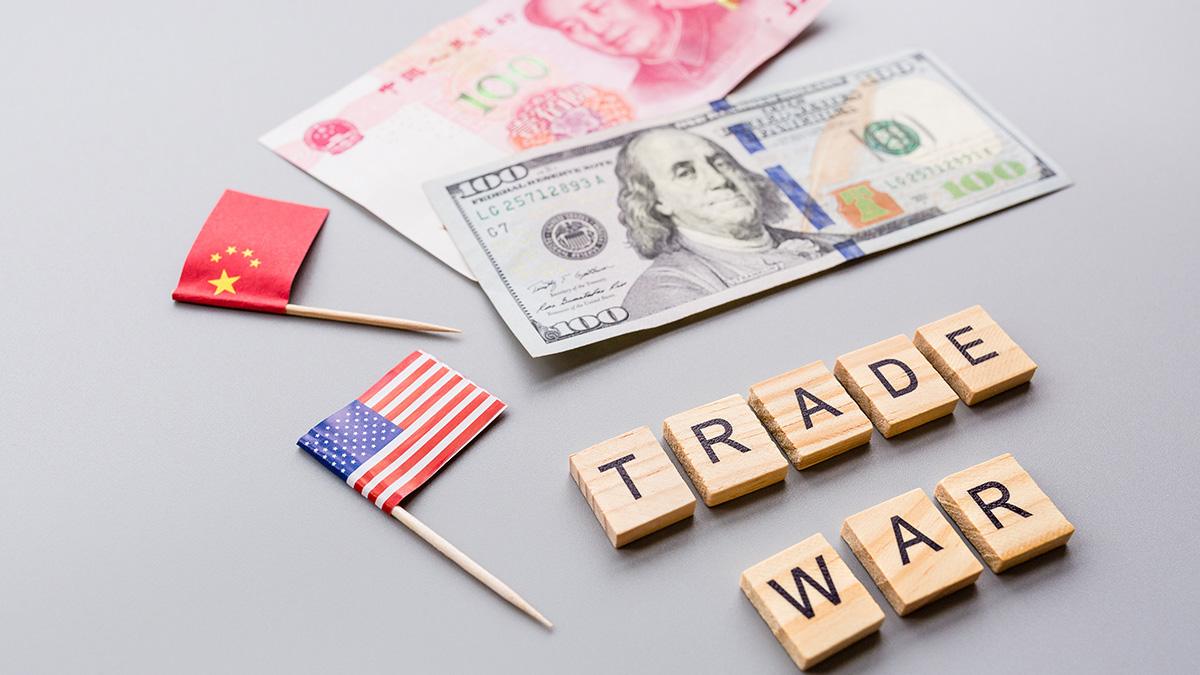
This Snippet was sent several months ago. These past weeks the President has imposed significant duties across the globe. Warren Buffet calls tariffs an act of war. Perhaps! I thought it might be worth resending.
Into this maelstrom of a Presidential campaign with issues such as abortion, child care, and the Supreme Court taking center stage, Donald Trump has also suggested a substantial increase in tariffs …tariffs! A subject as familiar to most Americans as Latin.
Tariffs are taxes on imports. Once they accounted for almost 20% of Federal revenue, currently they are less than 2%, yet they can cause inflation, recession, and wreak havoc on the global economy. Tinkering with them throughout our history has not always yielded the desired results. I am not an expert, and this isn’t the vehicle for a thorough examination…consider it a Primer.
The imposition of tariffs on imports actually began here with Alexander Hamilton, our first Secretary of the Treasury. He was looking for ways to raise revenues to pay the debt we had incurred to fund the Revolutionary war. These tariffs angered Great Britain, our largest trading partner, making their exports to the United States expensive. The dispute eventually led to the War of 1812.
In the last half of the 19th century high tariffs on imports were enacted to protect fledgling American industries, such as textiles and steels. It worked, and this period of heavy ‘protectionism’ helped our country develop. Today ‘protectionism’ is the primary purpose of tariffs.
After the Second World War the United States was the world’s only surviving industrial power and we had a surplus of farm products and manufactured goods we wanted to sell to an impoverished world. We also wanted to help our defeated enemies, Japan and Germany, as well as our European allies rebuild…no tariffs…free global trade. It worked…for a while.
Once those economies rebuilt, however, their less expensive labor gave them a competitive advantage. Within a decade a ½ million apparel jobs were lost, semiconductor assembly jobs had gone offshore along with steel. Even customer service centers were run from 3rd world countries. Yet, with all this turmoil, the world has thrived and the standard of living for Americans and those around the globe have risen.
The argument that imposing higher tariffs to protect American factory jobs is a noble one but there is a cost that includes higher prices for consumers and the likelihood of reciprocal higher tariffs on products we export.
Today the U.S. imports $1 billion more than it exports…it’s called a deficit balance of trade. We’ve been negative now for a number of years and it contributes to our $8 trillion national debt. It is interesting to note that both China and Japan each own nearly $1 trillion of U.S. bonds that sustain that debt.
Our world is interdependent and one country, any country, failing to recognize that actions have consequences can trigger an international financial crisis.
European countries are just getting out of their recession while our Federal Reserve policies have allowed the U.S. to escape reasonably unscathed. Meanwhile leading economists are wary of any radical policy changes that would substantially alter global tariffs. Trying to reverse the trend, we are currently building new semiconductor manufacturing facilities as well as expanding the mining of the rare materials needed in our new world and will allow us to maintain our intellectual leadership.