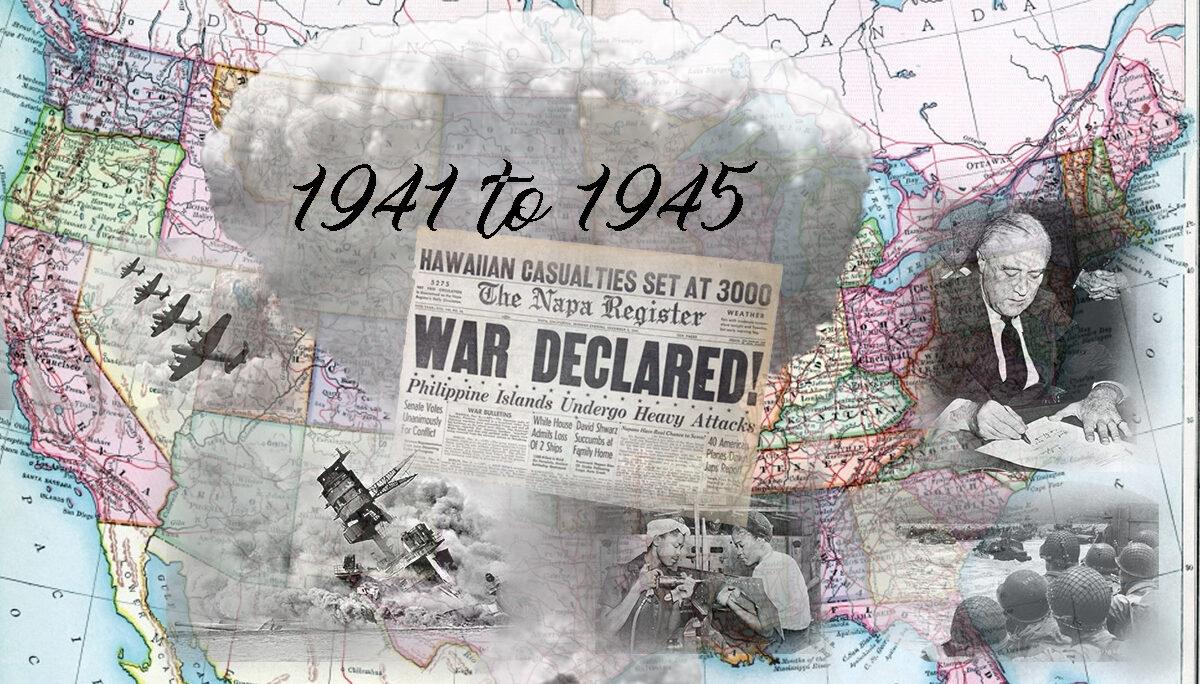
The War Years
The events of the decade of the ‘40’s were so extensive that it’s necessary to divide this Snippet into two 5 years segments.
In 1940, with wars waging in both Europe and Asia, President Roosevelt broke tradition, ran, and won a 3d term, Before the winter thawed, and the cherry blossoms bloomed, Russia had invaded Finland, Germany had invaded Norway and Denmark, Italy had annexed Albania, and joined Germany in its war against Great Britain and France.
In the United States, the country was divided between those who saw the inevitability of America’s entry into the global conflict, and the isolationists, who were intent on remaining out of it. Americans were still struggling to recover from the ‘Great Depression.’
Japan’s surprise attack on U.S. military bases at Pearl Harbor, Hawaiian Islands, “a day which will live in infamy” changed America forever. War against Germany, Italy, and Japan, ‘the Axis powers,’ was declared on 8 December 1941, and an enraged 132 million Americans united as never before.
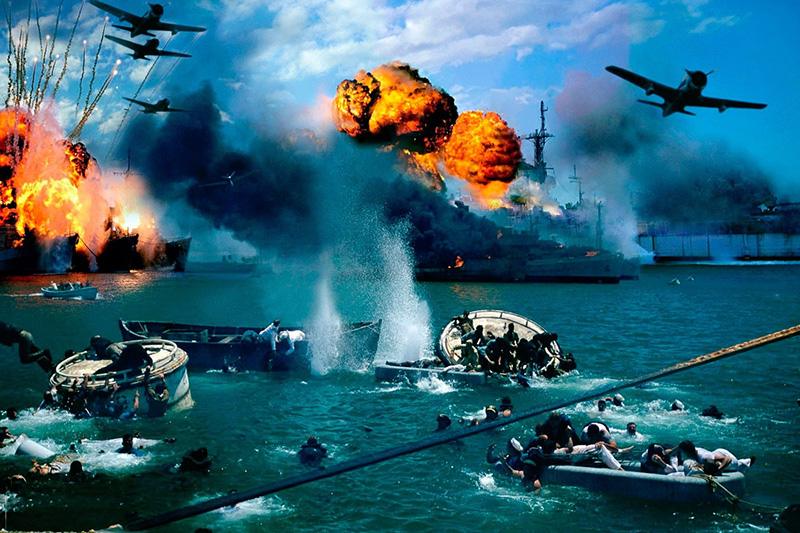
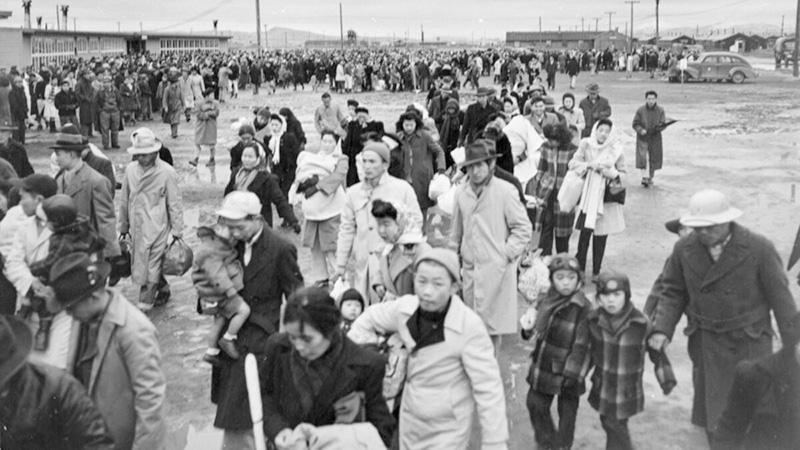
America factories stopped producing cars and refrigerators, and began manufacturing tanks, airplanes, and ships. Apparel factories went from fashion to khaki green. Men across the country lined up to enlist even before their number came up in the draft…white men, that is. Blacks weren’t wanted. It would be late 1942 before enlistments would be open to men of all races. Japanese families, many living here for a half century, were interned in camps, their homes and freedoms effectively forfeit.
The war wasn’t going well. The Japanese were capturing island after island, the Philippines, Bataan, Guadalcanal…all lost. Families feared getting ‘that’ telegram, “the War Department regrets to inform you…” A loved one had been killed in action. Casualties mounted. Gold star flags were displayed in homes. It would take the battle of Midway in June 1942 before there would be a victory in the Pacific.
Meanwhile, across the Atlantic, Britain was being attacked, without respite, by the German air force. Fears of an invasion were widespread, despite the effectiveness of stubborn Royal Air Force pilots flying their Spitfires. Meanwhile, Germany’s invasion of Russia was thwarted by the frigid Russian winter.
The Chinese civil war had paused while the two sides joined forces to fight the Japanese army. They were supported by a stubborn group of American pilots, the Flying Tigers, flying P-40 fighters in dogfights against superior Japanese Zeroes.
American women became nurses, truck drivers, and riveters. Children collected old newspapers and invested their weekly allowances into Series E savings stamps. Gasoline was rationed, as were sugar, coffee, and other staples. Movie stars enlisted. Betty Grable became everyone’s pin-up girl. Movies depicted American bravery. Crooners sang of the separation of loved ones. And, with men fighting in distant lands and women working, the birthrate dropped to the lowest in the country’s history.
American forces were now in North Africa waging intense tank campaigns. In mid-1943 150,000 Allied troops landed in Sicily, beginning the slow push up Italy.
In Russia, more than a ½ million people died in the siege of Leningrad. Another two million German and Russian soldiers were killed in the liberation of Stalingrad. Americans were learning new names…Iwo Jima, Monte Cassino, Nimitz, Patton, and Rommel.
On June 6, 1944, Allied forces landed on the beaches of Normandy, France. It was D-Day, the long-awaited invasion of Europe and the largest amphibious attack every undertaken.
Franklin Roosevelt was elected to his 4th term in 1944 but died in the spring of 1945, just a few months into his term. It was a month before V-E Day…victory in Europe. Overseeing that success would be Harry Truman, his Vice-President, a simple man, unprepared to lead a world shattered by a decade of war. His decision to drop atomic bombs on Japan, or invade the country, was complicated, but the bombs were dropped, and V-J came shortly thereafter.
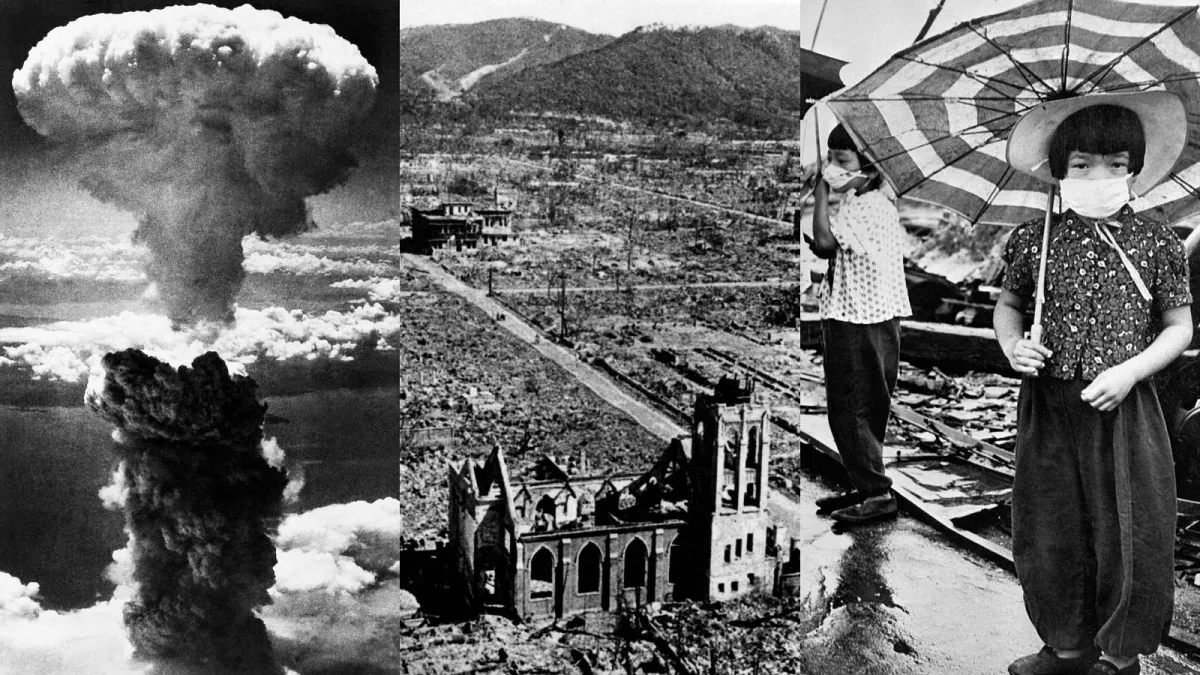
The war was over! An estimated fifty million people had been killed, including six million Jews, twenty million Russians, and 20% of Poland’s entire population.
Tom Brokaw would call the men and women who worked and fought “The Greatest Generation,” regular folks, your neighbors, and the kid next door. They had done what had been asked of them, but now they would be asked to forge a new, peaceful world. It would not be easy.