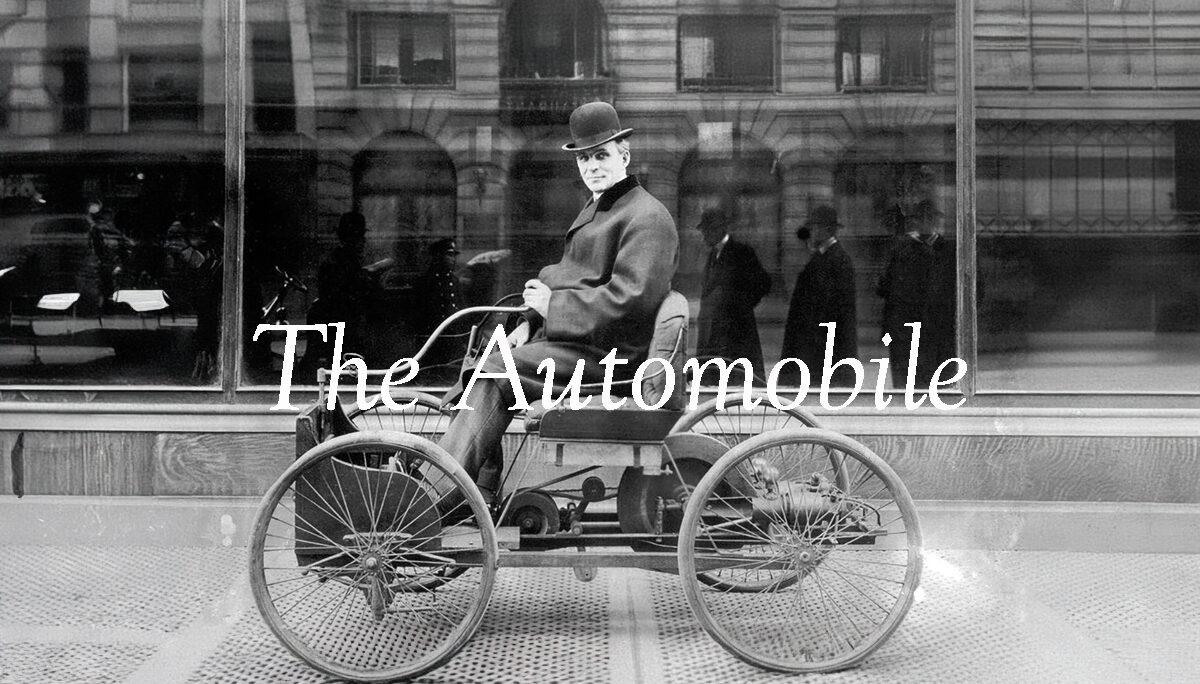
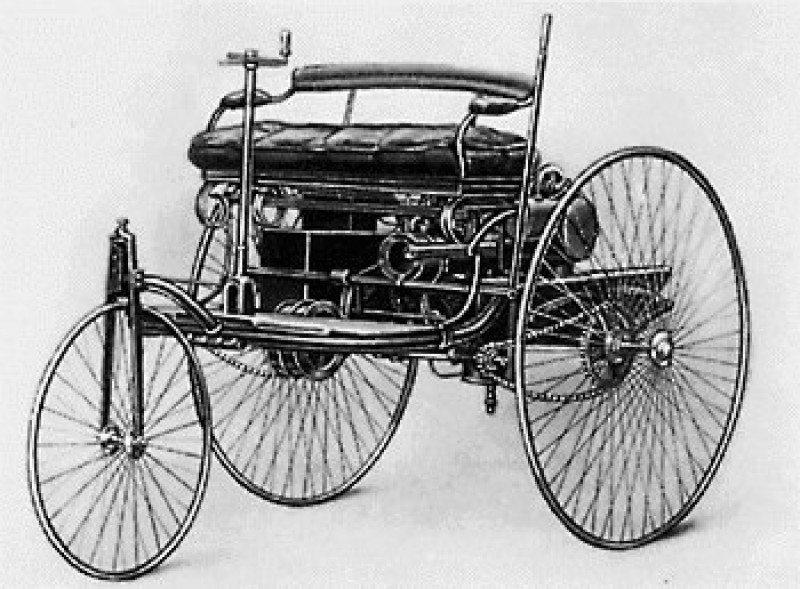
There wouldn’t have been the 20th century industrial miracle in the United States and the world without the automobile. In 1886 Carl Benz produced the 1st automobile with an internal combustion engine.
A few decades earlier oil had been discovered in Titusville, Pennsylvania. The combination of the two launched us into the Automobile Age. And it was great timing because major cities like New York were ready to sink under the weight of horse poop.
As the century moved from the 19th to the 20th, there were 100,000 horses just in New York City. These fine animals moved people and commerce from one borough to another but while they were doing so, they deposited 2 ½ million pounds of manure EVERY day (including Sundays) The stench and disposal problems were enormous. Automobiles were noisy and unreliable…but then, so were horses. Roads were built, reliability increased, and Henry Ford’s Tin-Lizzy’ made them affordable to everyone.
By the middle of the century being a two-car family was a necessity…sedans, convertibles, minivans, SUV’s, every size, every color, one for every pocketbook. Automobile production has become the backbone of our country’s manufacturing might. The United Auto Worker’s membership topped 1 ½ million. Factory workers thrived…they were the middle class. Their children went to college. We built freeways and an interstate highway system. Forget subsidies to public transportation…that was old school, and who wanted to take a bus anyway.
But the growing plethora of cars created a pall over our cities…SMOG. In Los Angeles, Denver, Houston, and elsewhere a brown mist introduced health issues. It took us two decades to mitigate that problem but by then our highways around the world were clogged…a twenty-minute commute now took an hour and when we reached our destination parking was necessary…and expensive.
Electric cars were the answer…no pollution. Really? Not so fast! Many major cities already faced a strained electric grid. If the Colorado River remains at its all-time low, Hoover Dam will have to resort to coal to provide electric power, ejecting tons of carbon dioxide into the air.
Electric cars have created another problem…they don’t use fuel, and it has been the fuel tax that allows states to maintain roads. The $.18 Federal tax is already projecting a shortfall of $140 Billion from a reduced number of gas-powered cars and trucks. In Michigan the revenue reduction was $50 million. In California the loss is estimated at $30 billion by 2040.
In the United States we have 270 million people over the age of 18. We also have nearly 300 million cars and trucks on the road with another 50 million added in the next decade. We are choking! Ask anyone who commutes in Seattle, Atlanta, Huston, Los Angeles, or New York. Freeways designed to speed traffic are now clogged four and five lanes across. Drivers have become increasingly impatient and rude. Road rage is rampant. and similar problems exists in France, the UK, and most of the Western World. Cities like London and Paris are already charging fees to enter the city center during the day.
Look ahead! The answer isn’t electric cars or driverless cars. The answer must be public transportation and, whether we like it or not, it will need to be government supported. Imagine high speed lines connected with feeder vans. Faster, less aggravation. Now, while you’re thinking about it, I’m going to get into my gas guzzler, and drive solo, radio blaring, without a care in the world, inhaling auto exhaust, going nowhere in particular…but that’s OK, I’ll text you while I’m driving!