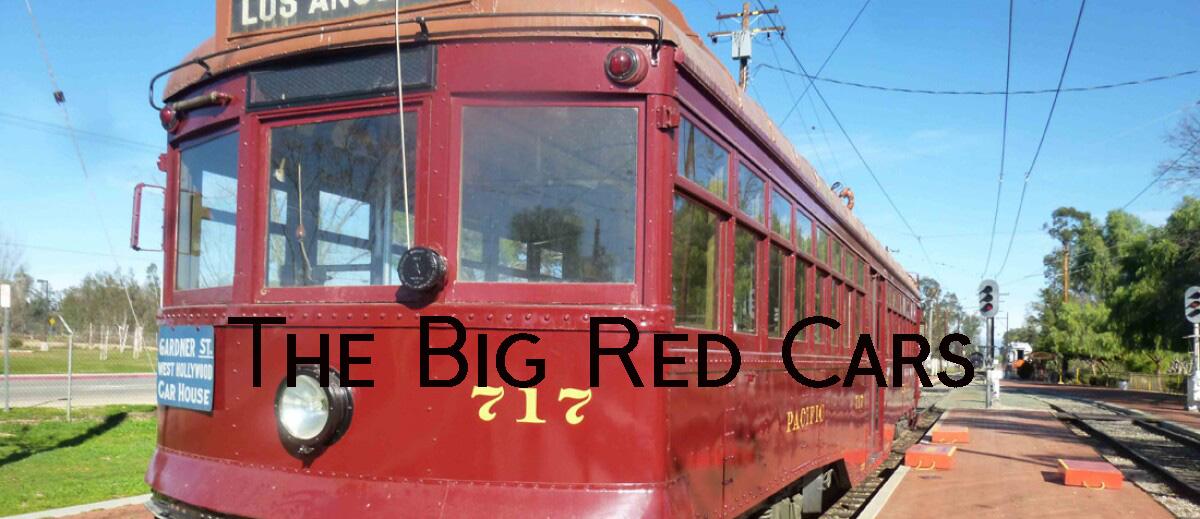
They changed Southern California from a sleepy pueblo of disparate communities to a vibrant entity. From City Hall to the Long Beach Pike to the Venice Canals and the Ocean Park Pier, past Beverly Hills, through Hollywood and to Pasadena …. big lumbering metal trolleys that we all depended on…the Big Reds!
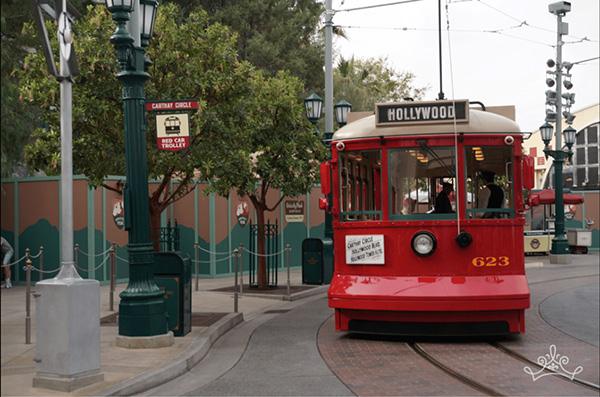
Electric trolleys first appeared in Los Angeles in 1887 and within a few years, earned their motto ‘from the mountains to the sea.’
The Pacific Electric Railway Company was established in 1911 to provide local streetcar service in Los Angeles and nearby communities. In the pre-automobile era, electric interurban rail was the most economical way to connect outlying suburban neighborhoods to central cities and for a time serviced more miles than any other system in the country.
Watts and South Bay residents used the red cars to commute to their jobs at the Firestone Tire Factory in Florence. On weekends these same folks would catch a Red Car and go to dances in Long Beach or Pasadena. Musicians who played in the many nightspots along 1930s Central Avenue enjoyed the ‘big red’ that would take them to the ocean or into Hollywood. They were inexpensive and it didn’t take long to get anywhere. When famous jazz musicians Charles Mingus and Buddy Colette rode the car from Watts to Los Angeles, they’d often launch into impromptu jam sessions…the passengers loved it. The Red cars enabled the jazz and blues clubs to thrive, as the cars drew a diverse clientele from different parts of the city. At a time when racial policies prevented blacks from entering clubs on the west side, Central Avenue became one of the few areas where whites and blacks could mix socially.
Early brochures from suburban communities promoted their access to Southern California’s regional attractions. Venice, Santa Monica, and Huntington Beach all benefited as the Big Reds facilitated the growth of the beach neighborhoods. Real estate interests advertised the P. E’s. “Balloon Route,” a name derived from the shape it traced going downtown to beach towns and back again. Perfect access to beachside living and leisure. Advertisements trumpeted Venice as ‘the Coney Island of the West,’ Redondo Beach as the ‘happy medium for the masses and attractions,’ and Huntington Beach as the ‘rendezvous for little families,’
In the mid-1930s the city planned to include interurban tracks in the center of each major roadway but the plan was never implemented . And, within a few years traffic congestion was becoming such a concern that the influential Automobile Club developed an elaborate plan to create an elevated freeway-type Motorway System, a key aspect of which was the dismantling of the streetcar lines, replacing them with buses that could run on both local streets and on new express ways. The war interrupted all the plans.
The Reds carried increased passenger loads during World War II, when the county’s population doubled as Lockheed, Douglas, Northrup, and others attracted millions of workers. For several years PE’s income statement showed a profit. Gasoline and rubber were rationed, and much of the populace depended on mass transit. At its peak, the PE dispatched over 10,000 trains daily and was a major employer in Southern California. But the equipment was getting old and suffered from deferred maintenance. Pressure from big oil and auto manufacturers encouraged the construction of high-capacity roadways across the area while discouraging further investment in public transportation.
Large-scale land acquisition for new freeway construction began in earnest in 1951 The original four freeways of the area, the Hollywood, Pasadena, Harbor, San Bernardino, were in use or being completed.
The last cars were idled in 1952. The new ‘light’ rail systems are no match for our memories, but they certainly are better than being stuck on the 101 or 405.