A Simple Letter
Early on a quiet Sunday morning an armada of Japanese ships and airplanes attacked American military bases at Pearl Harbor on the island of Oahu in the Hawaiian Islands. It was December 7th, 1941. The attack thrust America into World War II and united the forces of democracy and communism against the evils of fascism and imperialism.
By January enlistment lines grew as throngs of young men volunteered to serve their country. In Kansas a 26-year-old college Negro went into Wichita to sign up. He was beaten by white boys waiting in line. “This is a white man’s war,” they shouted. Jimmy Thompson limped home scared and confused.
Congress had approved a military draft in September 1940, and our forces swelled from ½ million to 2 million by the time we were attacked. Yet there were less than 4,000 Negroes…less than a dozen black officers in the military. Most of those were assigned to menial duties.
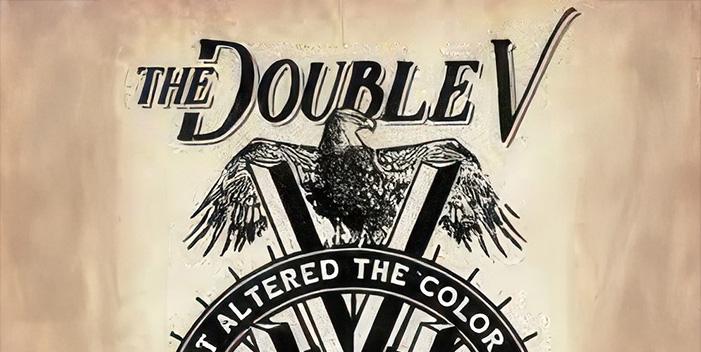
Jimmy Thompson didn’t know those statistics. He only knew it was wrong that he wouldn’t be allowed to defend his country. He wrote a letter to a large black newspaper, the Pittsburgh Courier, wondering why he should care about defending a country that treated him with so little respect. What we need, he said, was a Double V…a victory in the war and a victory over racism…a Double V.
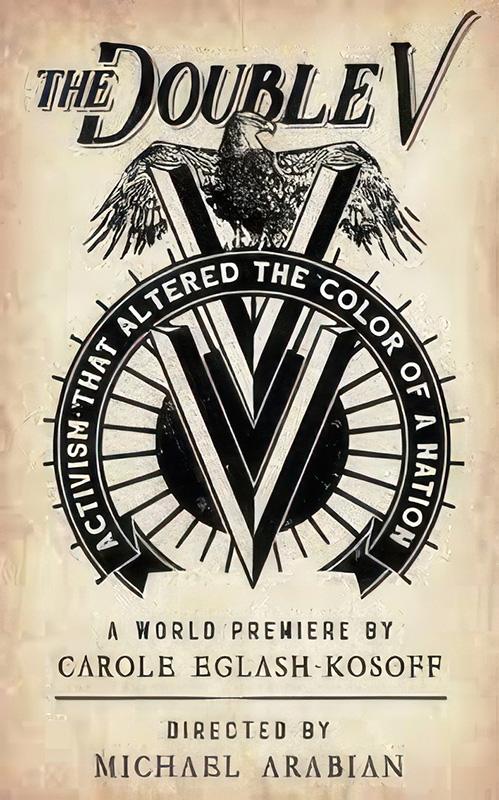
The Courier hoped Jimmy’s message would get blacks into the war. They added a logo and heralded The Double V. The more the country responded, the more militant the FBI became, fearing a demand for racial equality would blunt the message of patriotism. They threatened to close the newspaper. It would be the fall of 1942 before enlistments would be thrown open to people of all races.
Ultimately more than one million Negro men and women would serve their country with distinguished valor. The blood they shed blended with the blood of men, and women, white, yellow, and brown. Their ultimate sacrifices made no distinction.
These Negroes had a right to expect that some measure of racial equality would exist following the war. After all, there was the G.I. bill offering college and easy home ownership, but ‘red lining’ kept them out of some neighborhoods and the better jobs went to white veterans.
There were exceptions: Jackie Robinson, Dr. Ralph Bunche, Arthur Ashe, Dr. Martin Luther King, Marian Anderson, Thurgood Marshall, Jesse Jackson and perhaps another dozen, but most were hampered by the same attitudes that had pervaded our country from its inception.
Anger and frustration exploded in the 1960s and now, a half-century later, despite having elected our first black President, we find ourselves with the deaths of George Floyd, Eric Garner, Michael Brown, Breonna Taylor, Ahmaud Arbery, and ten innocent people shopping at a market in Buffalo, New York. All lives matter but the disproportionate number of black deaths gave a valid rise to the Black Lives Matter movement.
And it is reasonable to believe that it all began with a letter to the Pittsburgh-Courier by Jimmy Thompson, a young, disillusioned Negro, living in Kansas at the onset of World War II.
The Double V is available as a book on Amazon.