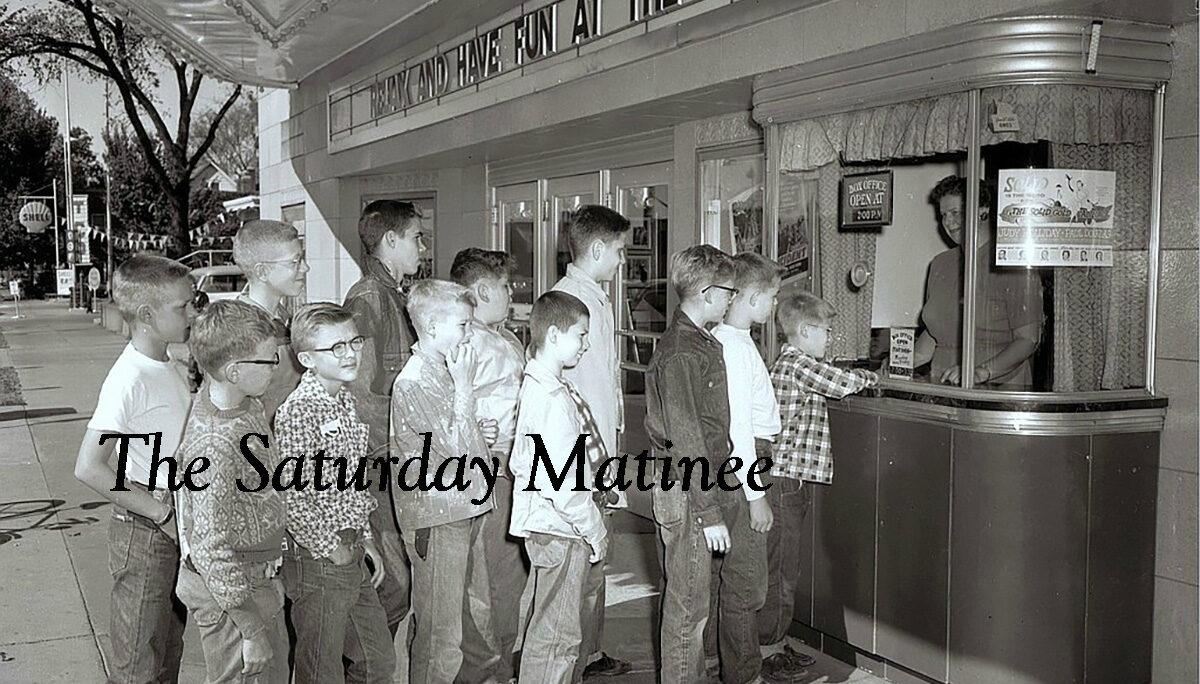
In the decades both before, and after, the Second World War, across cities and small towns alike, Saturday belonged to the kids. Most often that meant sending them off to the neighborhood movie theatre to watch a double feature of ‘shoot-em-up’ movies, Bugs Bunny foiling Elmer Fudd, and a variety of serials, half-hour thrillers that always ended with the hero or heroine about to die in some unseemly manner, only to be saved the following week while everyone speculated on how he/she would extricate themselves. Most of these serials were westerns.
Until the nickelodeons arrived in the early 20th century our infatuation with the west was limited to Wild West shows that toured with Buffalo Bill and Annie Oakley, dime novels, or an occasional newspaper story, such as Custer’s last stand, the Alamo, Billy the Kid or Wyatt Earp. Maybe the driving of the Golden Spike in Promontory, Utah that linked the railroads from the Atlantic to the Pacific or the Pony Express, gold in California, silver in Colorado and Nevada, or the ever-increasing stream of families in Conestoga wagons crossing the Rockies and great plains through hostile Indian territory, seeking a better life.
But with those teeming thousands came the grifters, gamblers, bank robbers, and rustlers. Fights over water, open ranges, and barbed wire resolved with six-shooters and Winchesters, yielding a plethora of human stories.
In the movies, however, dangerous issues were settled in less than an hour by a stranger in town, dressed handsomely in white or beige, with a matching horse and an off-beat side kick.
Cheering the hero and booing the villain while devouring a box of Jujubes, or salivating, as our jaws wrestled with a Milk Dud, was what youngsters did for a ticket that cost a dime, that grew to a quarter, while popcorn remained just a nickel.
In 1903, an 11-minute film, long for its day, gave us The Great Train Robbery, complete with good guys, bad guys, chases, and intercut scenes. The Western was born. In 1915 our first hero, Bronco Billy, was followed soon after by the taciturn William S. Hart.
But it was Tom Mix, and his wonder horse, Tony, in the 1920s that made the Saturday matinee a must for all the children in the family. The 1930s, and sound, brought to the screen more than thirty westerns a year, most filmed in the foothills around Los Angeles. Buck Jones, Ken Maynard, Randolph Scott, William Boyd, aka Hopalong Cassidy, and even John Wayne foiled the bad guys every time. Most of these inexpensive cookie-cutter films were produced by a small studio, Monogram, which later became Republic Pictures.
By the late 1930’s and throughout the ‘40’s, the genre evolved. Music was added and cowboys not only outshot the bad guys, but they also sang. Gene Autry, the singing cowboy, soon competed with Roy Rogers, his wife Dale Evans, and a horse named Trigger. Around their campfires the Sons of the Pioneers sang backup.
Directors like John Ford turned these ‘oaters’ into mega-films. And with deference to Clint Eastwood, Charles Bronson, Jim Arness and the others, no single film hero had the long-term appeal of the ex-Texas lawman turned vigilante, wearing a mask, and riding a horse named Silver. Enter the Long Ranger and his ever-present friend, Tonto. On radio and in the movies, he saved the day, leaving a silver bullet as a calling card, and riding into the sunset, shouting “Hi ho Silver.”
That theme, appropriated from the William Tell overture, still sends shivers and memories of our childhood, doesn’t it?