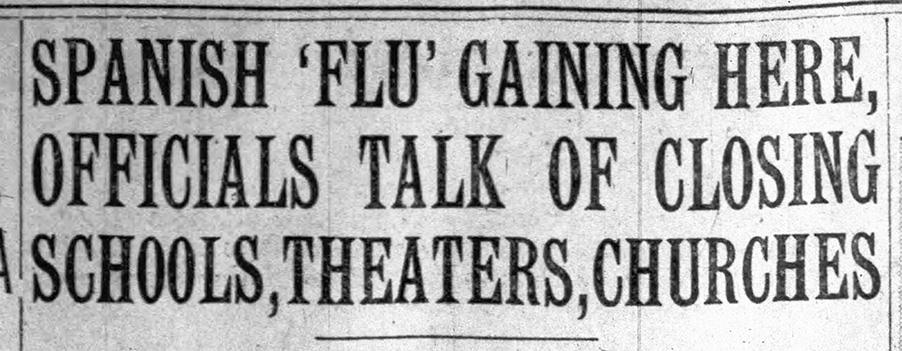
Here we go again! Another strain! More mandates! As we face the emergence of another Covid variant, we should be glad this isn’t 1918 when a similar pandemic ravaged the world. The Influenza Epidemic of 1918… the Spanish flu. It infected one-third of the world and killed as many as 50 million people. American deaths exceeded 600,000 at a time when the entire population of the country was just over 100 million. With the exception of the Black plague in the 14th century, it was the deadliest pandemic in history.
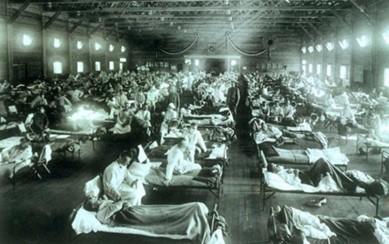
The pandemic broke out at the end of World War I among soldiers stationed in Europe. No one was certain how the outbreak began although long months in the filth of close trench living surely contributed.
Censors, anxious to maintain the euphoria of the war’s end, kept the information quiet. But Spain, which had been neutral, had no censorship and news of their outbreak set off an alarm and gave rise to the misnomer of ‘the Spanish flu.’
In March 1918 at Ft. Riley a soldier reported to ‘sick bay’ complaining of stomach pains, then a dozen more showed up. By the end of the day 500 soldiers had been hospitalized. The epidemic had reached America.
It was later determined that this flu was an H1N1 virus but in 1918 viruses were still a mystery. Most outbreaks have traditionally infected the very young or the elderly. This virus was devastating young adults, many having served in the war and were now heading home to New York, California, London and Paris.
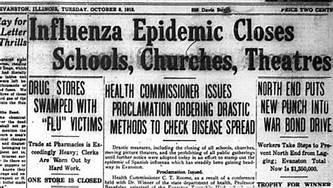
In New York City the health commissioner tried to slow transmission of the flu by ordering businesses to open and close on staggered shifts to avoid overcrowding on the subways. It didn’t work and as flu morphed into pneumonia, lungs filled with a viscous fluid. Taking a breath became more and more difficult and death followed quickly.
Like Covid, illnesses came in waves. The first wave of the pandemic occurred in the spring of 1918 and was generally mild. Those who experienced typical flu symptoms such as chills, fever and fatigue, usually recovered after several days. The number of reported deaths was low…just another flu season…no big deal.
In the fall, however, a second, highly virulent wave of influenza appeared with a vengeance. Victims died within hours or days of developing symptoms, their skin turning blue and their lungs filling with fluids that caused them to suffocate. In just one year, 1918, the average life expectancy in America plummeted by a dozen years.
There were no vaccines. Bodies were too often thrown into mass graves as hospitals and mortuaries were overwhelmed. All doctors could prescribe was bed rest, good food, salts of quinine, and aspirin. In September, a day after a large Philadelphia parade, 635 new patients were admitted to the hospital with the flu.
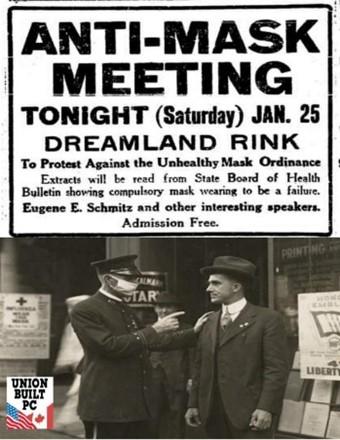
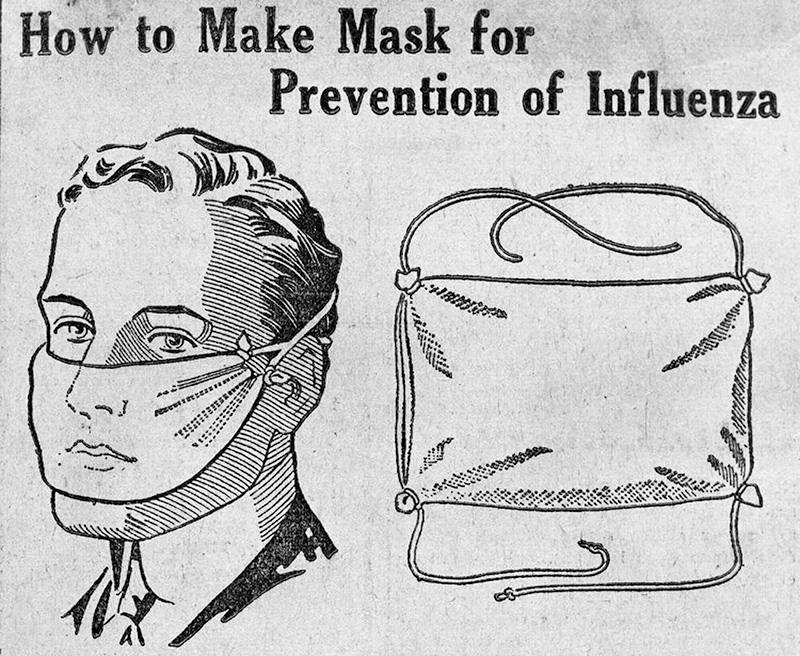
Masks, social distancing and quarantining were as controversial then as they are now.
A third wave came in Spring 1919 and added to the death toll. Then it faded away as mysteriously as it had come.
We owe a debt of gratitude to science and the medical profession for keeping us much safer this time and that includes ‘Big Pharma’ for the speed in which they developed vaccines.
This won’t be the last time humanity is confronted with bacteria and viruses capable of having lethal effects. It might not be reassuring but it is a certainty.
Be safe out there!